
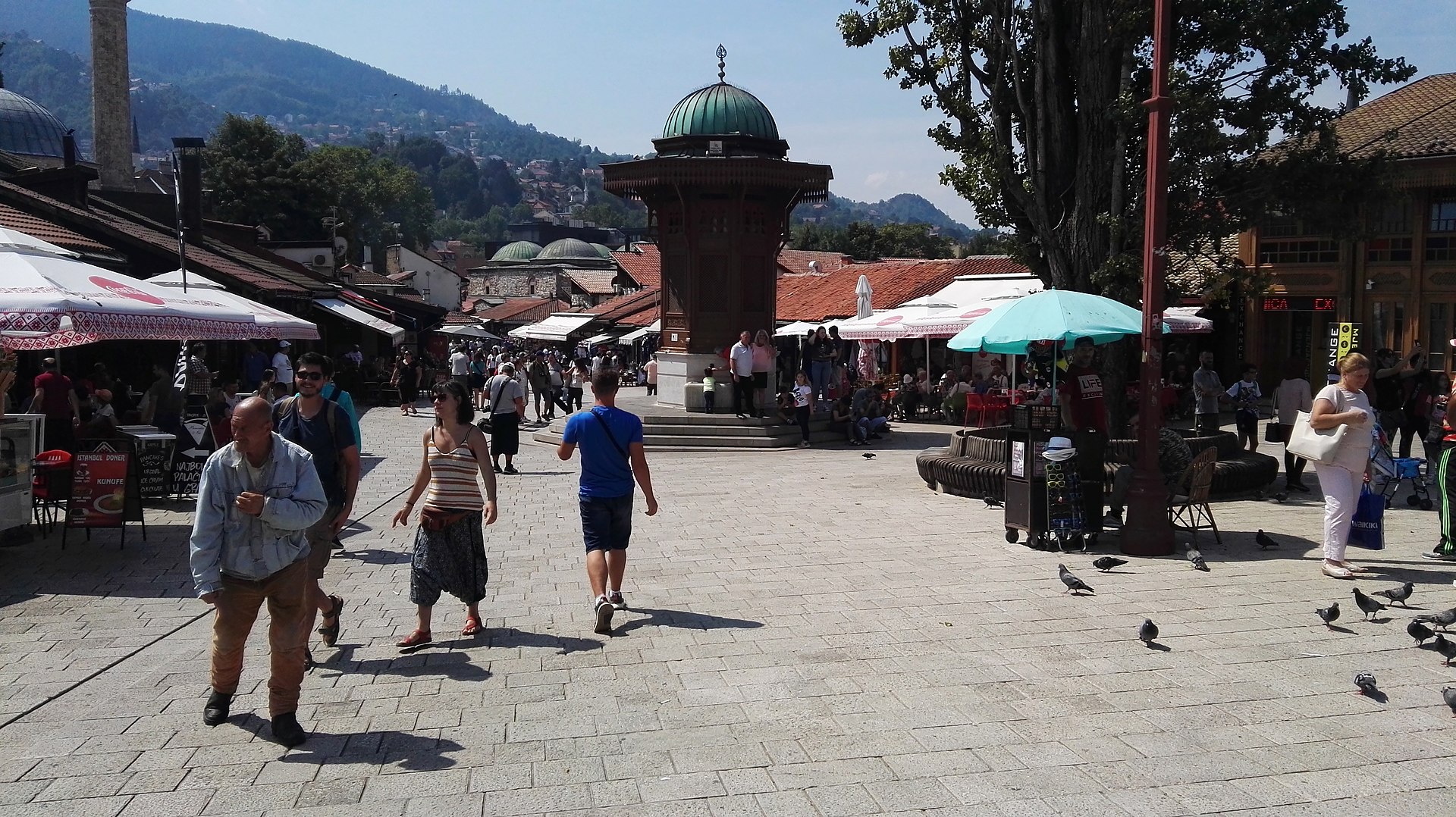
Sarajevo is a city that works very differently depending on where you base yourself. The difference between staying near the old town and staying in a more modern hotel zone is not just a matter of atmosphere -- it changes the whole rhythm of the trip. Getting the base right is the most important hotel decision you will make for a Sarajevo visit.
The most important decision: old town or central modern?
Sarajevo has two distinct accommodation zones that suit different kinds of travelers. The first is the old town area around Bascarsija -- cobbled lanes, Ottoman architecture, the best cafes and food in the city all within walking distance. The second is the more modern central zone around Marijin Dvor -- wider streets, more hotel-brand familiarity, slightly easier logistics for business or transit-style travel.
For most first-time visitors, staying near Bascarsija is the better answer. The atmosphere is what makes Sarajevo memorable, and being inside it rather than a taxi ride away from it makes the whole trip feel more coherent.
Bascarsija and the old town area
The old bazaar quarter is where Sarajevo's identity is most concentrated. Staying within ten minutes walk of Bascarsija means your evenings end naturally -- dinner somewhere good, coffee at a terrace, a walk back to the hotel through lanes that feel unlike anywhere else in the region. There is no equivalent to that in the more modern parts of the city.
The area is hilly in places, which matters if you have heavy luggage or limited mobility. Taxis and rideshare apps work well in Sarajevo and are cheap, so arriving with bags is not a serious problem even if the exact location involves some walking.
Hotels and guesthouses in and around Bascarsija typically cost 50 to 100 EUR per night for a solid mid-range option. The range is wide -- there are budget guesthouses from 30 EUR and boutique properties pushing 150 EUR, but the mid-range sweet spot is well-served.
Best for: First-time visitors, couples, food-focused trips, anyone who wants Sarajevo to feel atmospheric and walkable from the first evening.
Marijin Dvor and the central hotel zone
Marijin Dvor is the area around the main Avenue, roughly 15 to 20 minutes walk from Bascarsija. It has more recognizable hotel brands, wider streets, and easier access to the bus and tram network. It works better for business travelers, people with early flight connections, and anyone who prefers a more standard hotel setup over a guesthouse or boutique property.
The tradeoff is that Marijin Dvor does not have Bascarsija's atmosphere. The area around it has some good restaurants and cafes but lacks the density of character that makes the old town side so memorable. Travelers who base themselves here often spend their evenings walking to Bascarsija anyway, which adds 20 to 30 minutes of transfer to every evening out.
Hotels here are often slightly more expensive than equivalent quality in the old town area, because international brands carry a premium. A mid-range hotel in Marijin Dvor typically costs 80 to 140 EUR per night.
Best for: Business travelers, transit stays, travelers who prioritize hotel brand familiarity over atmosphere, anyone with early or late transport connections.
The wider centre and the Miljacka river area
Some good accommodation sits between these two zones, particularly along or near the Miljacka river. This can be a practical middle ground -- close enough to Bascarsija to walk easily but with slightly more space and quieter streets than the old town core. Worth considering if the Bascarsija area feels too busy or the Marijin Dvor area feels too remote from the atmosphere.
What to avoid
Avoid booking hotels in the outer residential suburbs without checking specifically how long the walk or transit to Bascarsija takes. Sarajevo has some affordable accommodation in areas that look central on a map but are functionally inconvenient for a short tourist visit. The city is built along a long valley and distances can be deceptive when reading a map.
Also avoid the temptation to choose the cheapest option available without reading reviews for location specifically. In Sarajevo, a centrally located guesthouse at 55 EUR will almost always give you a better trip than a modern hotel at 45 EUR that adds 30 minutes of transit to everything.
How many nights do you need?
Two full nights is the minimum to feel like Sarajevo made sense. Three nights is better -- it removes the rush from the second day and lets you explore the war tunnel museum, a viewpoint, and the old town at a pace that does not feel like ticking boxes. Four or five nights works well for travelers who want to use Sarajevo as a base for a day trip to Mostar.
Practical booking tips
Book in advance for peak season (July, August) and for the Sarajevo Film Festival period in August, when accommodation fills quickly and prices rise. Shoulder season (May, June, September, October) offers the best combination of good weather, manageable crowds, and reasonable prices. Spring and autumn are genuinely the best times to visit Sarajevo for most travelers.