
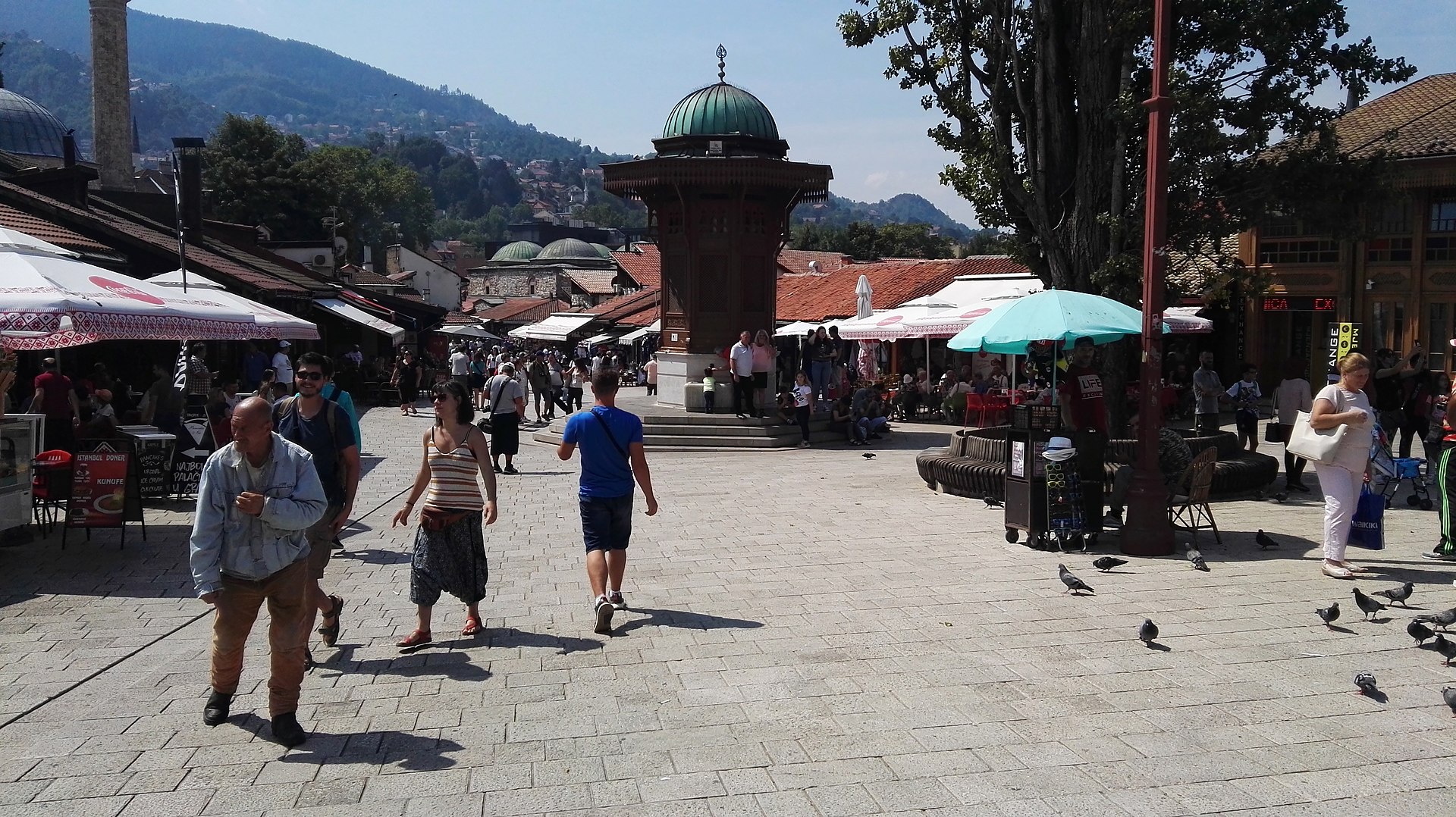
Sarajevo over three days works best when the itinerary is honest about what the city actually is -- a compact, atmosphere-heavy place that rewards slower movement, good food, and enough time to let the old-town character settle in. This is a day-by-day plan that reflects how the city actually functions rather than what looks good on a list.
Before you arrive: where to base yourself
Stay as close to Bascarsija as your budget allows. The old bazaar quarter and its surrounding streets are where the best of Sarajevo is concentrated. Being within ten minutes walk of the main square means evenings end naturally -- dinner somewhere good, a walk home through lanes that smell of roasting coffee and grilled meat, no taxi needed. Hotels and guesthouses in this area run roughly 50 to 100 EUR per night for a solid mid-range option.
Day 1: Bascarsija, the old town, and the first evening
Arrive and resist the temptation to over-plan the first afternoon. Drop your bags and walk toward Bascarsija without an agenda. The main square (Sebilj fountain area) is the natural orientation point. From there, the old town opens in every direction -- covered markets, the old coppersmith street (Kazandziluk), small mosques, and an atmosphere that is genuinely unlike anywhere else in Europe.
Lunch on day one: go to Zeljo or Asdaf for cevapi. These are two of the most reliable cevapi spots in the city, both near the old town. Cevapi (small grilled meat sausages in flatbread with onions) cost around 4 to 6 EUR for a full portion and are the single most important thing to eat in Sarajevo. Do it on day one before you run out of time.
Afternoon: walk the length of the old town from the Ottoman quarter at the east end to where it transitions into the Austro-Hungarian architecture of Ferhadija Street heading west. The visual shift from minarets and bazaar lanes to Central European facades happens over about 200 meters -- it is one of the most striking urban transitions anywhere on the continent.
Evening: find a terrace with a view for dinner. The streets around and above the old town have several restaurants with city views. If the weather is good, this is the right night to eat outside. Budget 15 to 25 EUR per person for a sit-down dinner with drinks.
Day 2: War Tunnel Museum, cable car, and a longer lunch
The War Tunnel Museum is the most important site in Sarajevo for understanding the city's recent history and the most worthwhile paid attraction in the city. The tunnel was used to supply the city during the 1992-1995 siege -- a 800-meter passage dug under the airport runway that kept Sarajevo alive during the longest siege of a capital city in modern warfare. The museum is about 20 minutes by taxi from the centre (roughly 10 EUR each way) and costs around 10 EUR to enter. Allow 1.5 to 2 hours.
Return to the city centre by late morning. Lunch on day two is the moment for a longer, more relaxed meal. Inat Kuca (the Spite House, a historic restaurant on the river near the Latin Bridge) is one of the more atmospheric lunch options -- traditional Bosnian food in a building with a genuinely odd history. Lunch for two with drinks runs around 25 to 40 EUR total.
Afternoon: the cable car to Mount Trebevic. The cable car was destroyed during the siege and rebuilt in 2018 -- riding it now carries a particular resonance given the history. The return ticket costs about 10 EUR and the ride takes around 8 minutes each way. At the top, there are views over the city and the ruins of the old Olympic bobsled track from the 1984 Winter Games, now partially covered in street art. Allow 2 to 3 hours including travel time.
Evening: the Latin Bridge area is worth a stop before dinner. The bridge is where Archduke Franz Ferdinand was assassinated in 1914, triggering the First World War. The small museum at the corner of the bridge is free to enter and takes about 20 minutes. Dinner near the river or back toward Bascarsija.
Day 3: Yellow Fortress, final wandering, and departure prep
The Yellow Fortress (Zuta Tabija) is the best free viewpoint in Sarajevo. It is a 15-minute uphill walk from the old town and gives a panoramic view over the minarets, rooftops, and surrounding mountains that is the defining image of the city. Go in the late afternoon when the light is at its best, or in the morning if you prefer cooler temperatures and fewer people.
Morning of day three is the moment for anything you did not get to on the first two days. The Gazi Husrev-beg Mosque (the largest Ottoman mosque in Bosnia, free to enter outside prayer times) is worth 20 minutes if you did not go on day one. The covered market (Bezistan) adjacent to it is one of the oldest continuously operating markets in the Balkans.
Final lunch: burek. Bosnian burek -- flaky pastry filled with minced meat -- is the other essential food alongside cevapi. A good burek from a proper buregdzinica costs around 2 to 3 EUR and is best eaten standing at the counter. Sac is a good spot near the old town. Go early because the best batches sell out by mid-morning.
The afternoon and evening before departure can be genuinely slow -- a coffee on a terrace, one last walk through the old town, an early dinner if the flight or bus requires it. Sarajevo does not demand that every last hour be productive. That restraint is part of what makes it a good three-day destination.
Practical notes
Taxis in Sarajevo are metered and cheap -- most rides within the centre cost 3 to 6 EUR. Ride-hailing apps (Bolt operates in Sarajevo) are reliable and slightly cheaper than street taxis. The Bosnian mark (KM) is the local currency, pegged at roughly 2 KM to 1 EUR. Most places accept both cash and cards but having some local currency is useful for smaller food spots and taxis.
The city is hilly. The old town sits in a valley and the viewpoints and outer neighborhoods involve real uphill walking. Comfortable shoes matter more in Sarajevo than in most Balkan cities.