Why visit Sarajevo?
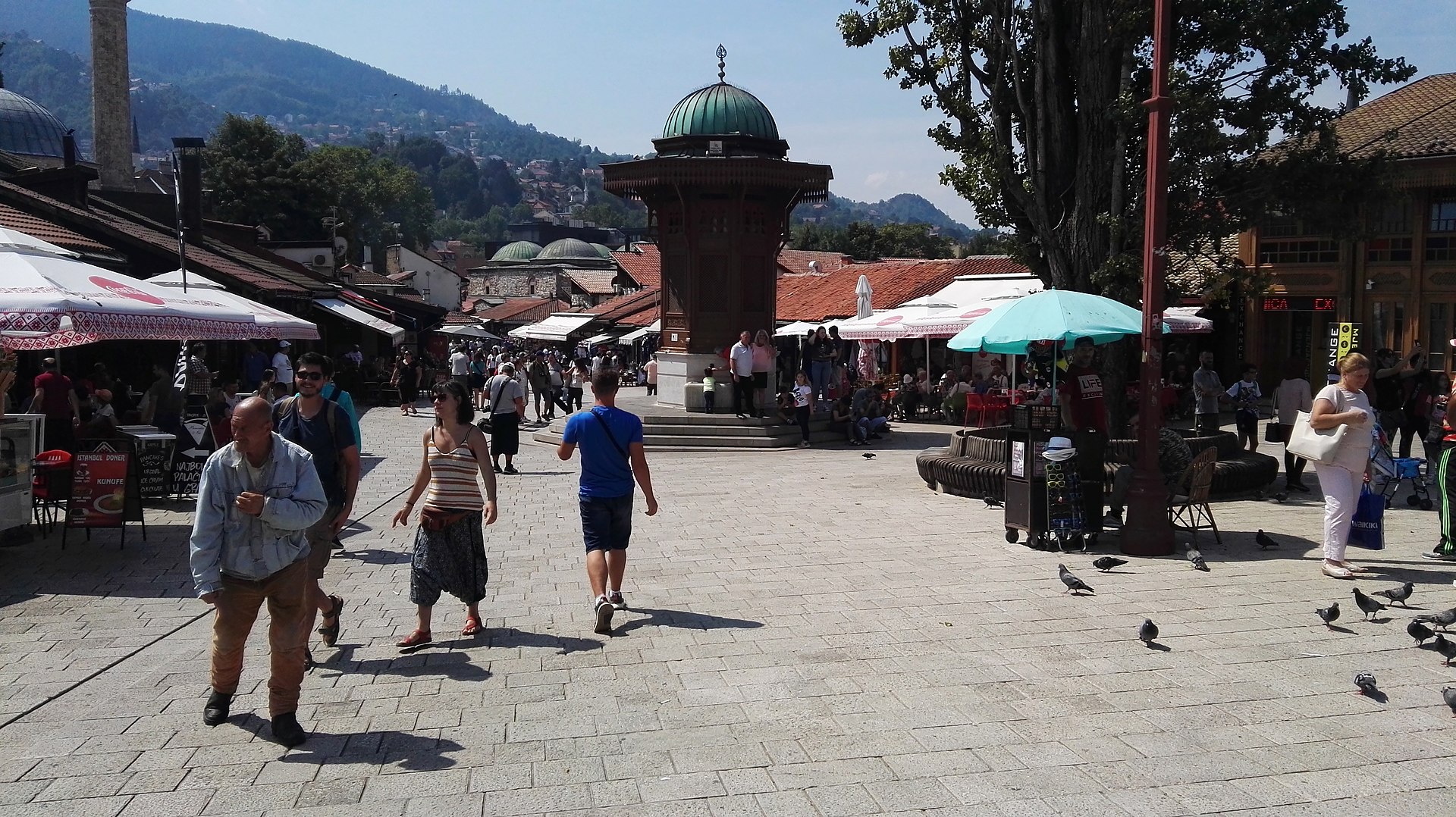
Baščaršija is the Ottoman bazaar at the heart of Sarajevo and has been operating since the 15th century. The copper craftsmen, coffee houses, and the Sebilj wooden fountain still give it a working character rather than a museum atmosphere. The best approach is to arrive without a specific plan — the square is compact enough that you find the main points without effort. Ćevabdžinica Petica Murića (known as Petica) and Ćevabdžinica Željo are the two names that come up most often for ćevapi. Both are small, basic, and very good. A plate of ten ćevapi with somun bread costs around 8-10 BAM (€4-5).
Walking west from Baščaršija, the streets shift into the Austro-Hungarian quarter built after 1878. The architecture changes completely — Vienna-era facades, the old post office building, and the Latin Bridge where Archduke Franz Ferdinand was assassinated in 1914. The short walk between the two zones makes Sarajevo's layered history feel physically immediate in a way few European cities can replicate. Some blocks still show war damage from the 1990s siege, left unrepaired as deliberate markers.
The Yellow Fortress (Žuta Tabija) is the best viewpoint in the city. The walk takes about 15 minutes from Baščaršija and the sunset view over the minarets and valley is consistently cited as one of the best in the region — and it is free. The Tunnel of Hope Museum (Tunel D-B) on the southwestern edge of the city documents the underground passage used to supply the city during the 1992-1995 siege. It is about 8km from the center and worth the trip for anyone with more than two nights.
Need the practical booking angle next? Compare the best areas to stay in Sarajevo or keep browsing our Balkan travel guides before you book.
Airport
Sarajevo International Airport
Currency
BAM
Ideal Trip
2-4 days
Trip Style
Culture + food + history
Best for
Food-focused travelers, culture and history enthusiasts, couples wanting an atmospheric city break, budget-conscious visitors, and anyone who wants a European city break with genuine character.
Best time to visit
May, June, September, and October are the strongest months. The Sarajevo Film Festival in August adds energy but also increases accommodation demand and prices. Winter is cold but atmospheric -- the coffee culture and indoor food scene are at their most appealing.
Best areas to stay
Bascarsija
Bascarsija is the Ottoman bazaar quarter and the atmospheric heart of Sarajevo. Staying here means the best cevapi spots, the covered market, the mosques, and the evening cafe scene are within a 10-minute walk. Hotels and guesthouses in this area cost 50 to 100 EUR per night. Best for: first-time visitors, food-focused travelers, couples, and anyone who wants the most atmospheric version of the city.
Marijin Dvor
Marijin Dvor is the modern hotel zone along the main avenue, roughly 15 to 20 minutes walk from Bascarsija. It has larger, more standardized hotels and better transport connections. Prices run 80 to 140 EUR per night. Best for: business travelers, transit stays, and anyone who prefers standard hotel facilities over old-town character.
Skenderija
Skenderija is a transitional area between the old town and the modern centre, near the Miljacka river. A practical middle ground for travelers who want old-town proximity without being in the busiest streets. Accommodation runs 55 to 90 EUR per night. Best for: travelers who want balance between atmosphere and practical access.
Mejtas
Mejtas is a quieter residential neighborhood close enough to the centre for easy walking. More local in feel and slightly lower in price than the main hotel zones. Apartments cost 45 to 75 EUR per night. Best for: longer stays and travelers who want a genuinely residential Sarajevo experience.
Things to do
Begin in Bascarsija
The old town gives Sarajevo its strongest identity and is usually the right starting point for a first visit.
Build the day around food and history
Sarajevo often lands best when you combine one or two cultural stops with cafe and dinner time.
Leave room for slower evening walks
The city atmosphere often improves when you stop rushing and let the streets settle around you.
How many days work best in Sarajevo?
Sarajevo is usually strongest when travelers plan roughly 2-4 days and then build the stay around one clear trip style instead of trying to force every possible sight into the schedule. In practice, the better approach is to choose the right neighborhood, keep the daily rhythm realistic, and leave room for food, walking, and one slower part of the day. That is usually what turns a city from a checklist stop into a place that actually feels memorable.
What first-time visitors should prioritize
For a first visit, the smartest strategy is usually to make location decisions early and activity decisions later. Travelers often overthink the day plan and underthink the base. In Sarajevo, the right area usually shapes whether the trip feels walkable, polished, and easy or slightly harder than it needs to be. Once the base is correct, the rest of the trip tends to fall into place much more naturally.
Easy itinerary pairings
If Sarajevo is only one stop in a wider Balkans route, two of the cleanest pairings are Mostar if you want one scenic overnight within the same trip and Belgrade or Zagreb if the itinerary needs a stronger capital-city contrast. The best pairing depends on whether you want the next stop to raise the energy, slow the pace down, or add a stronger scenic contrast. That kind of contrast usually creates a better multi-stop trip than choosing two cities that feel too similar.