
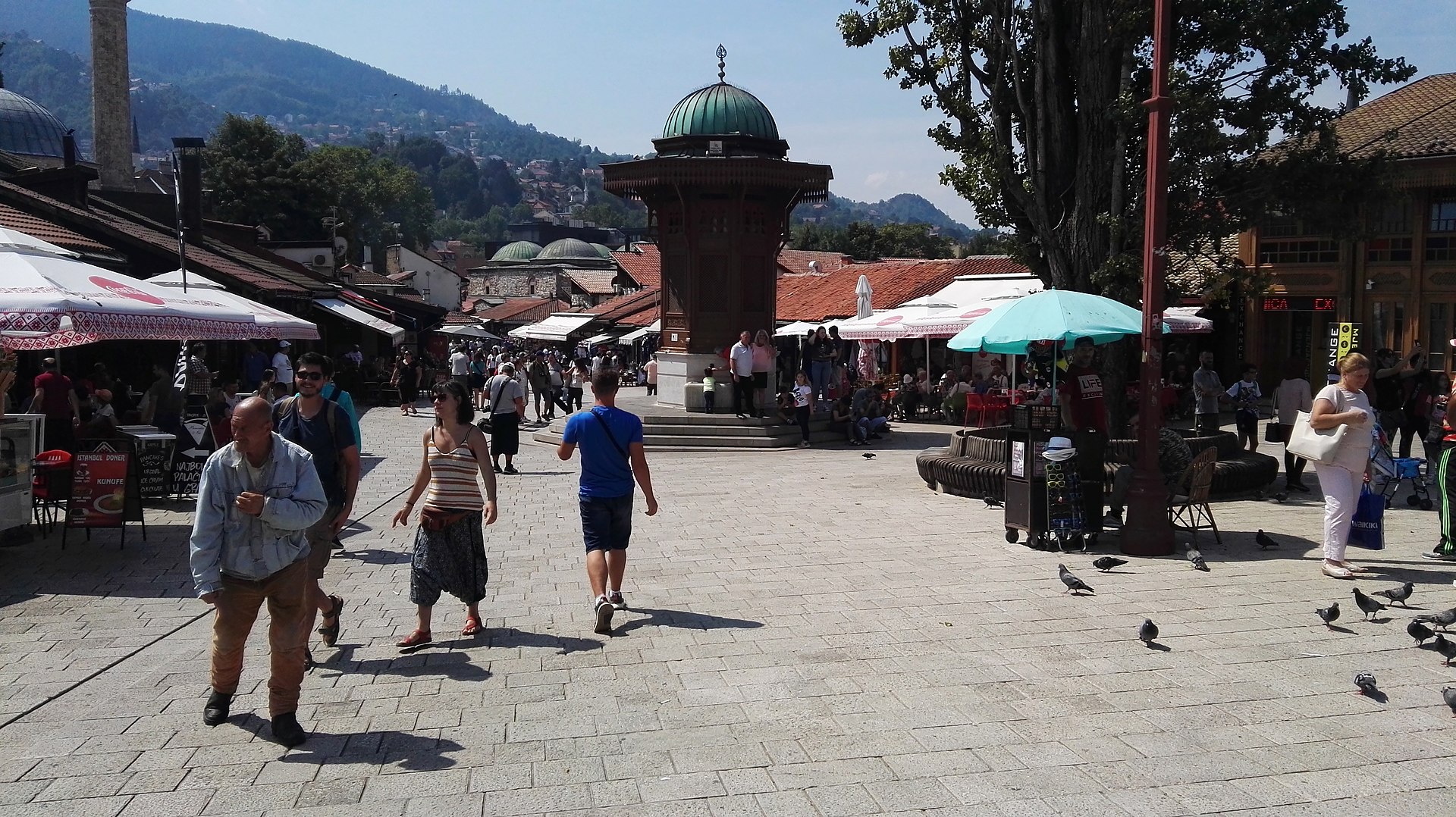
Sarajevo is not expensive by Western European standards, but it is not as uniformly cheap as some older travel content suggests. The city offers genuinely good value when the trip is built around what it naturally does well — food, coffee, atmosphere, and walkable old-town exploration. It starts to feel less reasonable when travelers try to recreate a polished Western hotel experience in a city that rewards a different approach.
The short answer: Sarajevo is affordable, but not free. Budget correctly and it is one of the best-value city breaks in the region. Ignore the nuances and you can overspend without getting a better trip for it.
What accommodation actually costs in Sarajevo
The range in Sarajevo is wide. A clean, well-located guesthouse or budget hotel near Bascarsija typically costs between 40 and 70 EUR per night for a double room. A solid mid-range hotel with more comfort and a better breakfast runs roughly 80 to 130 EUR per night. Boutique or design hotels in the old town area push into the 130 to 200 EUR range.
Apartments via Airbnb or Booking.com can offer good value for longer stays, particularly if you are travelling as a couple or small group. A well-located apartment in the old town or central area typically costs 50 to 90 EUR per night.
Peak season in Sarajevo (July and August) does push prices up, but not as dramatically as Dubrovnik or Split. Shoulder season (May, June, September, October) is often the sweet spot — comfortable weather, lower prices, and fewer tour groups.
What food and drink costs
Food is where Sarajevo genuinely shines for value. A cevapi portion (the local grilled meat dish, essentially mandatory on a first visit) with bread and onions costs around 4 to 6 EUR at a good buregdzinica or cevabdzinica. A full sit-down lunch at a mid-range restaurant in the old town typically runs 8 to 15 EUR per person including a drink. Dinner at a proper restaurant with wine sits around 15 to 25 EUR per person.
Coffee is absurdly affordable. A Bosnian coffee at a cafe in the old town costs around 1.50 to 2.50 EUR. This matters because Sarajevo is a city where you spend real time in cafes — a longer morning or afternoon sitting with coffee and baklava is part of the experience, and it barely registers on the budget.
Beer and local spirits are similarly priced well. A half-litre of local beer at a bar costs around 2 to 3.50 EUR. Wine is more variable depending on the restaurant, but a decent local bottle at dinner adds roughly 10 to 15 EUR to the bill.
Activities and entry fees
Most of what makes Sarajevo good is free or very cheap. Walking the old town, Bascarsija, and the central streets costs nothing. The Sarajevo War Tunnel Museum (one of the most sobering and worthwhile visits in the city) costs around 10 EUR. The Yellow Fortress viewpoint is free and gives one of the best views over the city. The cable car to Mount Trebevic costs around 10 EUR return and is worth it for the views and the unusual post-war history of the mountaintop.
Guided walking tours run around 15 to 20 EUR per person for a 2-hour group tour. Private guides are available from around 50 to 80 EUR for a half-day.
Daily budget by travel style
Budget traveler: Staying in a hostel or basic guesthouse (20 to 35 EUR per night), eating cevapi and burek, drinking Bosnian coffee, and skipping paid activities beyond the tunnel museum. Realistic daily budget: 40 to 55 EUR per person.
Mid-range traveler: Comfortable hotel near the old town (70 to 110 EUR per night), mix of casual and sit-down meals, one or two paid activities. Realistic daily budget: 80 to 110 EUR per person.
Comfort traveler: Boutique hotel, better restaurants each evening, private guide for half a day, cable car. Realistic daily budget: 130 to 180 EUR per person.
Where travelers usually overspend
The most common mistake is choosing a hotel that is slightly outside the old town area to save money on accommodation, then spending more on taxis because the base is inconvenient. In Sarajevo, being within easy walking distance of Bascarsija and the main central streets is worth paying slightly more for. The city rewards pedestrian exploration and the wrong location can make the whole stay feel harder than it should.
The second most common mistake is eating at tourist-facing restaurants on the main drag near Bascarsija rather than walking one or two streets back. The food is usually no better and often significantly more expensive. The best cevapi in Sarajevo is rarely found at the most visible spot.
Is Sarajevo worth it compared to other Balkan cities?
Sarajevo sits roughly in the middle of the Balkan cost spectrum. It is cheaper than Zagreb, Dubrovnik, and Ljubljana. It is comparable to Belgrade and Skopje, though food in Sarajevo tends to feel like better value than food in Belgrade at equivalent price points. It is slightly more expensive than Tirana for accommodation but comparable on food.
For the atmosphere, food quality, and overall experience it offers, Sarajevo is genuinely good value. It is one of those cities that consistently surprises travelers who arrive expecting a rough Balkan outpost and leave having had one of the best short city breaks of recent memory. The cost is rarely the reason anyone regrets going.