
Understanding Skopje's layout before choosing
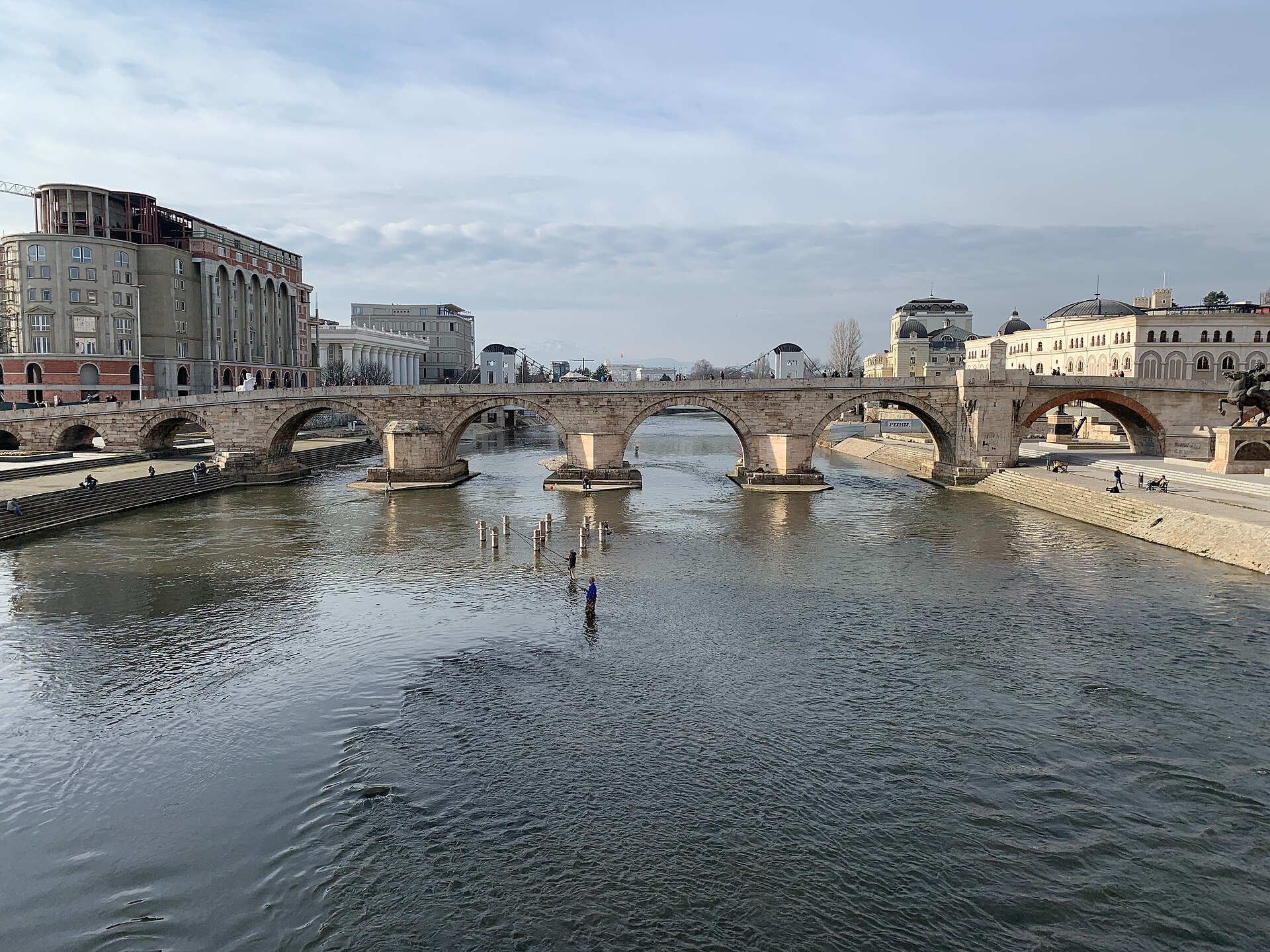
Skopje is divided by the Vardar river, and the division matters for accommodation decisions. North of the river is the Old Bazaar (Čaršija) — the Ottoman quarter, the oldest continuously used bazaar in the Balkans, and the most atmospheric part of the city. South of the river is the modern center, dominated by the contentious Skopje 2014 project (neoclassical statues and facades built from 2010 onward) and the commercial pedestrian zone. Debar Maalo, a residential neighbourhood 15 minutes southwest of the center, offers a quieter, more local alternative. All three areas are small enough that the distance between them is irrelevant — a walk across the Stone Bridge connects the Bazaar to the center in under five minutes.
Old Bazaar: best for atmosphere and history
Staying in or immediately adjacent to the Old Bazaar puts you in the most historically interesting part of Skopje. The lanes run from the Stone Bridge north through the old caravanserai, the Mustafa Pasha Mosque (1492), the Daut Pasha Hammam (now an art gallery), and dozens of craft workshops and tea houses that operate largely as they have for centuries. The Bazaar is quieter in the mornings and comes alive in the late afternoon as the heat drops. Guesthouses and small boutique hotels here tend to be older buildings with character; prices are competitive at €40-70 per night for a mid-range double.
The trade-off is that the Old Bazaar has less in terms of modern restaurants and bars within walking distance at night. The evening life is concentrated south of the Vardar. That said, the Bazaar itself at night — quiet, with the mosques lit and the stone lanes empty — is a genuinely unusual experience that staying in the center does not give you.
City center (Macedonia Square area): best for convenience
The area around Macedonia Square and the Ploštad fountain is the most hotel-dense part of Skopje and the most convenient for first-time visitors. Everything is walkable — the National Museum, the Holocaust Memorial Center, the Stone Bridge to the Bazaar, and the main restaurant and bar street (Makedonija Street) are all within a 10-minute radius. The Skopje 2014 architecture — the giant equestrian statue of Alexander the Great, the neoclassical government facades, and the river fountains — is either interesting or bewildering depending on your perspective, but it is visible from most accommodation in this area.
Mid-range hotels here cost €55-90 per night. The area has more international hotel brands than the Bazaar side, which suits travelers who prefer predictable standards. The downside is that the immediate surroundings feel more curated and less lived-in than the Old Bazaar or Debar Maalo.
Debar Maalo: best for a local residential feel
Debar Maalo is a neighbourhood of early 20th-century houses, independent cafes, and local restaurants that sits about 1.5km southwest of Macedonia Square. It has the highest concentration of good independent restaurants and coffee shops in the city — places that local residents use rather than tourist-facing establishments — and the pace is noticeably calmer than the center. Accommodation here tends to be apartments and guesthouses rather than hotels, at €35-60 per night. The walk to the center is 15-20 minutes or a short taxi (150-200 MKD).
Debar Maalo is the best choice for travelers who want to understand what Skopje is actually like for residents rather than the layer of international tourism. It is also the best base for evening meals — the neighbourhood has several restaurants that rank among the best in the city without the tourist pricing of the center.
The honest recommendation
For first-time visitors who want to experience Skopje's most distinctive character: the Old Bazaar. For maximum convenience and easy orientation: the city center near Macedonia Square. For a quieter stay with better independent food options: Debar Maalo. All three are within comfortable walking distance of each other, so the choice is more about atmosphere preference than logistics.