
Skopje and Tirana are both significantly underrated as short-break destinations and both offer excellent value. They attract different kinds of travelers and have genuinely different identities -- choosing between them is worth thinking through rather than treating them as interchangeable Balkan capitals.
Skopje: what it actually offers
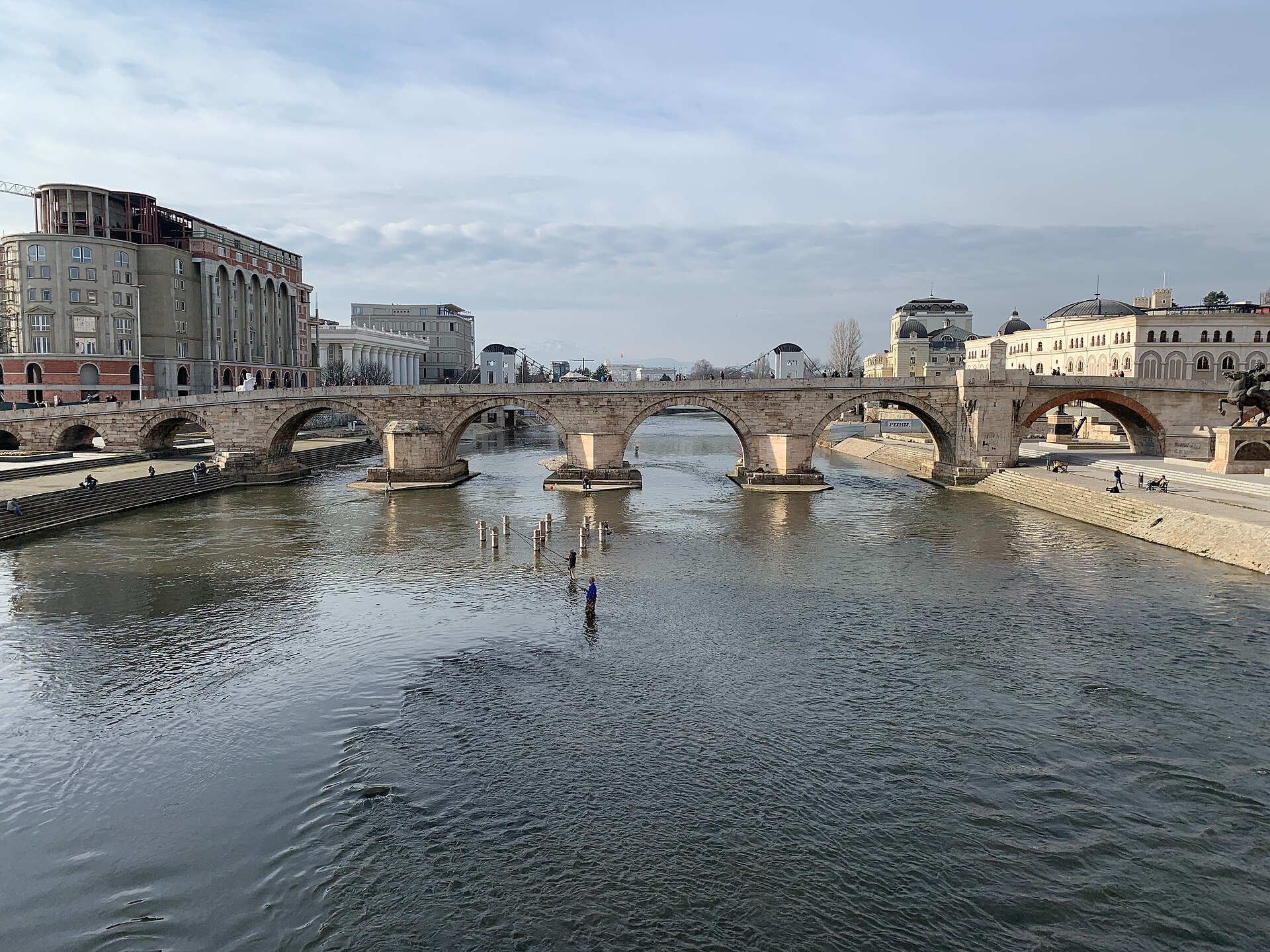
Skopje is one of the most unusual capitals in Europe, largely because of a controversial urban redevelopment project called Skopje 2014 that filled the city centre with neoclassical statues, triumphal arches, and large public buildings in an attempt to give the city a more historical appearance. The result is visually strange -- a mix of genuine Ottoman heritage (the Old Bazaar is one of the largest and most authentic in the Balkans) and somewhat artificial European grandeur that many visitors find fascinating and others find baffling.
The Old Bazaar (Carsija) is the most rewarding part of Skopje and genuinely one of the best in the region. The maze of lanes, workshops, mosques, and small restaurants on the north bank of the Vardar river is the authentic Skopje that predates the 2014 project by several centuries. Allow half a day minimum here.
Skopje connects naturally with Ohrid (3 hours south by bus) -- the Skopje-Ohrid combination is one of the strongest short North Macedonia itineraries and covers both the capital and the most scenic stop in the country in four to five nights.
Best for: Travelers interested in unusual or offbeat cities, anyone curious about the Skopje 2014 phenomenon, travelers using Skopje as a gateway to Ohrid or Kosovo.
Cost: Very affordable. Mid-range hotels in the centre cost 50 to 90 EUR per night. A good dinner runs 10 to 18 EUR per person. Daily budget: 50 to 80 EUR per person.
Tirana: what it actually offers
Tirana is one of the most interesting cities in the Balkans right now. The Albanian capital has changed dramatically over the last decade -- the Blloku district, once reserved exclusively for the communist party elite, is now the most vibrant neighborhood in the city with good restaurants, cafes, and bars that rival any in the region. The National History Museum is one of the better history museums in the Balkans. The BunkArt museums (two former communist-era bunkers converted into art and history spaces) are genuinely fascinating.
Tirana has an energy that feels different from most Balkan capitals -- faster, more chaotic, and at the moment more interesting as a city in genuine transition. It rewards travelers who are curious about Albania's unusual history (50 years of extreme communist isolation) and its rapid opening to the world.
The food scene in Blloku is strong. Albanian cuisine -- byrek (filo pastry with cheese or meat), tavë kosi (baked lamb with yoghurt), and fresh seafood at coastal-influenced restaurants -- is underrated and very affordable.
Best for: Travelers who want an emerging destination before it becomes mainstream, history-focused trips, food-curious travelers, anyone with Albania specifically on their radar.
Cost: The most affordable capital on this list. Mid-range hotels in Blloku cost 50 to 80 EUR per night. A good dinner runs 8 to 15 EUR per person. Daily budget: 40 to 70 EUR per person.
Side-by-side comparison
Old town / historic atmosphere: Skopje wins, specifically for the Old Bazaar. Tirana's communist-era architecture is interesting but not atmospheric in the same way.
Food and cafe scene: Tirana wins, particularly in the Blloku district. The food quality and variety in Tirana has improved faster than almost any city in the region in recent years.
Value: Both are excellent. Tirana edges out Skopje on raw affordability.
Ease of getting there: Both have international airports with connections to major European cities. Tirana has slightly more flight options due to Albania's growing tourism profile.
Day trip options: Skopje has Ohrid (3 hours). Tirana has the Albanian Riviera coast (2 to 3 hours south) and Berat (2 hours south, a UNESCO-listed Ottoman town).
How many nights in each
Two nights is enough for Skopje as a standalone city break. Three nights gives you more time for the Old Bazaar and a day trip to Ohrid or the Matka Canyon. Two nights is also right for Tirana, with a third night useful if the BunkArt museums and a day trip to Berat are both on the agenda.