Why visit Skopje?
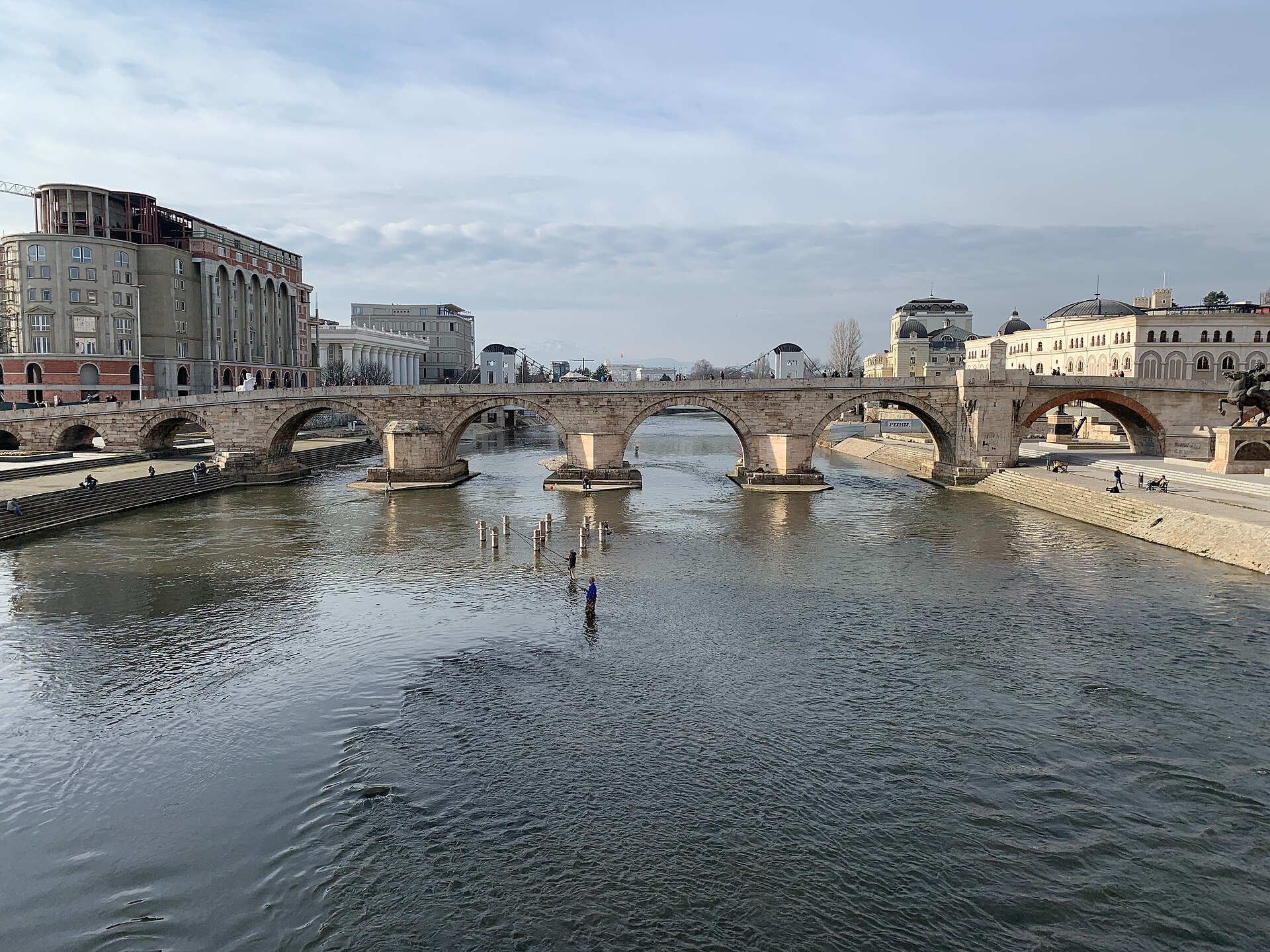
Skopje makes most sense when you accept that it is two very different cities occupying the same space, separated only by the Vardar river and the Stone Bridge. The Old Bazaar (Čaršija) on the north bank is one of the largest surviving Ottoman-era bazaars in the Balkans after Istanbul's Grand Bazaar. The lanes hold working craftsmen, mosques dating to the 15th century including the Mustafa Pasha Mosque and the colorful Šarena Džamija (Painted Mosque) in nearby Tetovo, and the Bit Pazar fresh market. It functions as an active trading center rather than a preserved exhibit.
Cross the Stone Bridge to the south bank and the context changes entirely. Skopje 2014 was a government urban program that placed neoclassical and baroque-style statues, facades, and monuments across the central zone between 2010 and 2014. The most visible result is Macedonia Square with the large equestrian statue of the Warrior on a Horse (officially unnamed but widely understood as Alexander the Great), surrounded by dancing fountains and flanked by monumental government buildings given classical facades. The project is openly controversial — criticized by architects, economists, and many residents for the cost and the visual incongruity — but it is also unlike anything in any other European capital, which makes it interesting whether or not you admire it.
Vodno Hill rises immediately south of the city. The Millennium Cross at the summit is 66 metres tall and visible from most points in Skopje. A cable car runs to the upper station near the cross (the lower section has been periodically unreliable; the upper section from the mid-station tends to operate more consistently). Matka Canyon, 15km west of the center, is a river gorge with boat tours into caves, kayaking, and hiking trails through karst landscape. It is the strongest natural half-day addition to a Skopje stay and is easily combined with the cable car into a full day outside the city.
Need the practical booking angle next? Compare the best areas to stay in Skopje or keep browsing our Balkan travel guides before you book.
Airport
Skopje International Airport
Currency
MKD
Ideal Trip
2-3 days
Trip Style
Practical city break + value
Best for
Travelers curious about unusual or offbeat destinations, anyone interested in the Skopje 2014 project as political and architectural phenomenon, budget-conscious visitors, and travelers using Skopje as a gateway to Ohrid or Prizren.
Best time to visit
April through October for the most comfortable conditions. May, June, September, and October are optimal for walking and exploring. July and August are hot but manageable. Winter is cold and quiet.
Best areas to stay
Macedonia Square Area
The Macedonia Square area is the most central Skopje base -- the fountain statue, the Stone Bridge, and easy walking to both the modern city and the Old Bazaar across the river. Hotels here cost 50 to 90 EUR per night. Best for: first-time visitors who want straightforward orientation and easy access to both halves of the city.
Old Bazaar Edge
The Old Bazaar edge, on the north bank of the Vardar, is the most atmospheric Skopje base. Staying here puts the mosque lanes, artisan workshops, and traditional restaurants within immediate walking distance. Guesthouses cost 40 to 75 EUR per night. Best for: travelers who want more texture and older character than the modern city centre offers.
Debar Maalo
Debar Maalo is a lively residential neighborhood south of the centre with good cafes, bars, and a younger local atmosphere. A 15-minute walk to the main sights. Apartments and guesthouses cost 40 to 70 EUR per night. Best for: travelers who want nightlife, cafe culture, and a more local Skopje neighborhood.
City Park Side
The City Park side is a quiet area adjacent to the main Skopje park, with easier walking and a calmer feel than the busiest square zone. Hotels cost 45 to 80 EUR per night. Best for: travelers who want a simple, calm base with good green space access.
Things to do
Start with the walkable core
Use the central area first so the city becomes easier before you expand the itinerary.
Mix one anchor sight with food and downtime
That rhythm usually works better than trying to overfill every day.
Use accommodation choice as part of the trip strategy
The right base often shapes the overall experience more than travelers expect.
How many days work best in Skopje?
Skopje is usually strongest when travelers plan roughly 2-3 days and then build the stay around one clear trip style instead of trying to force every possible sight into the schedule. In practice, the better approach is to choose the right neighborhood, keep the daily rhythm realistic, and leave room for food, walking, and one slower part of the day. That is usually what turns a city from a checklist stop into a place that actually feels memorable.
What first-time visitors should prioritize
For a first visit, the smartest strategy is usually to make location decisions early and activity decisions later. Travelers often overthink the day plan and underthink the base. In Skopje, the right area usually shapes whether the trip feels walkable, polished, and easy or slightly harder than it needs to be. Once the base is correct, the rest of the trip tends to fall into place much more naturally.
Easy itinerary pairings
If Skopje is only one stop in a wider Balkans route, two of the cleanest pairings are Ohrid if you want the second base to slow the trip down and Prizren if you want a compact character-led stop. The best pairing depends on whether you want the next stop to raise the energy, slow the pace down, or add a stronger scenic contrast. That kind of contrast usually creates a better multi-stop trip than choosing two cities that feel too similar.