
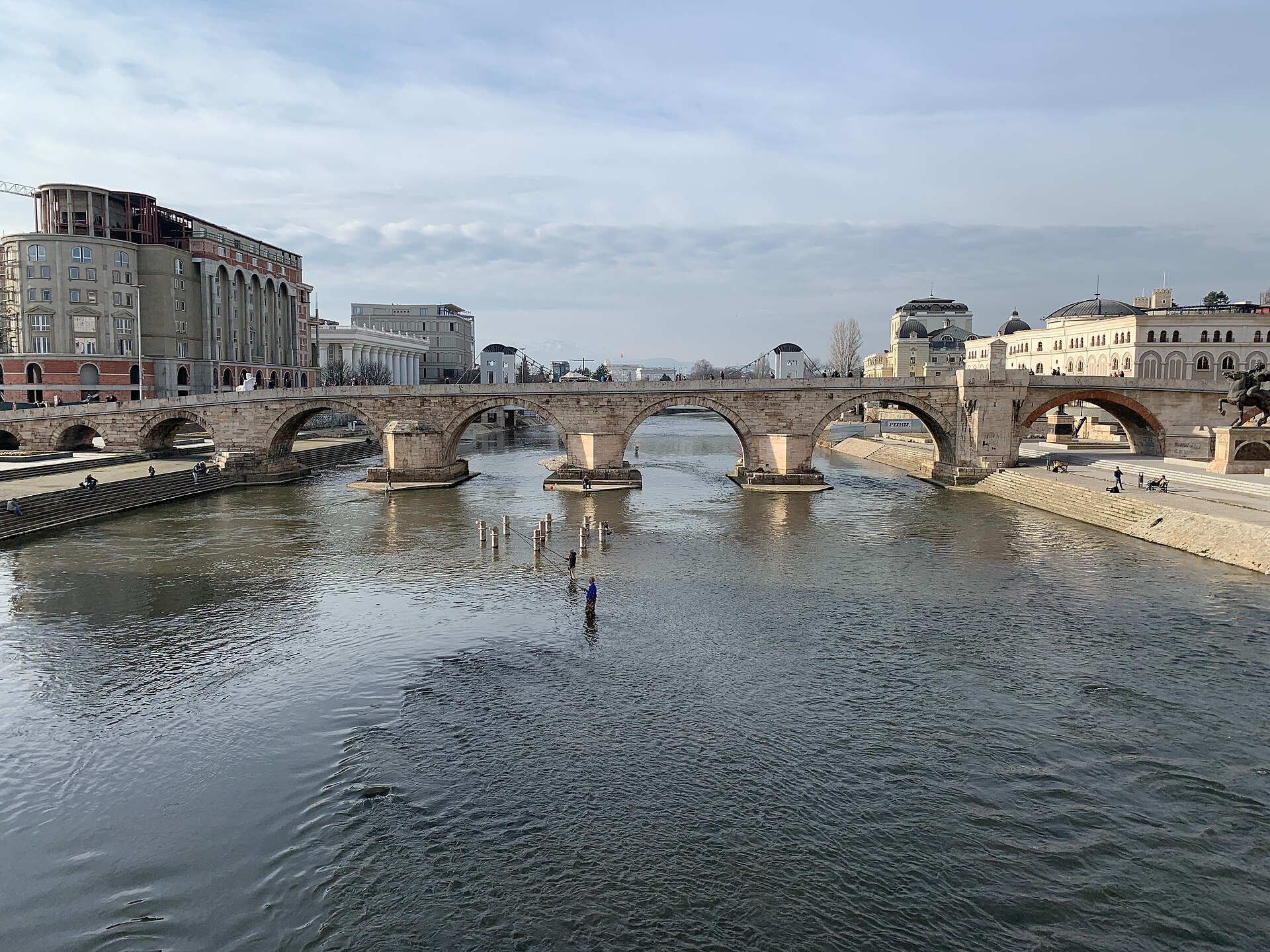
Skopje is not a city that tries to be charming in the conventional European capital sense. It is unusual, sometimes baffling, and genuinely interesting in a way that most guidebooks fail to capture. Whether it is worth a weekend depends on what you find interesting about cities -- and whether you have a tolerance for the kind of ambitious urban intervention that produced the Skopje 2014 project.
What Skopje actually is
Skopje is a city of two very distinct halves. The south bank of the Vardar river is the modern city centre, dominated by the results of the Skopje 2014 project -- a government initiative that installed hundreds of neoclassical statues, triumphal arches, and large public buildings in an attempt to give the city a more historically grandiose appearance. The results are visually extraordinary in a way that is hard to categorize: simultaneously fascinating, absurd, and genuinely impossible to ignore. The Macedonia Square area, with its giant fountain statue of Alexander the Great (officially unnamed but widely understood) and the stone bridge leading to the old town, has to be seen to be understood.
The north bank is the old Ottoman town -- the Carsija (Old Bazaar). This is one of the largest and most authentic Ottoman bazaar areas in the Balkans, significantly less touristed than the equivalent areas in Sarajevo or Istanbul. The lane network, the artisan workshops, the mosques, and the hans (Ottoman caravanserais) give a genuine sense of the city before the 20th century. Allow at least half a day here and eat lunch at one of the traditional restaurants in the bazaar area.
What to do in two days
Day 1: Start on the south bank at Macedonia Square to experience the Skopje 2014 project in full. Cross the Stone Bridge to the old town. Spend the afternoon in the Carsija -- the Mustafa Pasha Mosque (one of the most beautiful Ottoman structures in the city, free to enter), the Bit Pazar open market, and the Museum of the Old Bazaar. Evening back in the modern centre -- the restaurant scene along the riverfront is solid and reasonably priced.
Day 2: The Skopje Fortress (Kale) above the old town gives views over both halves of the city and helps make sense of the geography. The Museum of Macedonia has a comprehensive collection covering the country's complex history. The Memorial House of Mother Teresa (she was born in Skopje) is a small but well-presented museum near Macedonia Square. Afternoon options include the Matka Canyon, about 15 kilometers west of the city -- a dramatic gorge with a lake, monasteries carved into the cliff face, and boat trips available. Reached by taxi (about 15 EUR each way).
Who Skopje suits best
Skopje works well for travelers who are curious about unusual or offbeat destinations, for anyone interested in the absurdity and sincerity of the Skopje 2014 project as a political and architectural phenomenon, and for travelers passing through North Macedonia on the way to Ohrid (3 hours south) who want to give the capital more than a transit stop. It is less suited to travelers who want a conventionally pretty or polished European city break.
Cost
Skopje is very affordable. Mid-range hotels in the centre cost 50 to 90 EUR per night. A good dinner in the old town or riverside area runs 10 to 18 EUR per person. Daily budget for a comfortable stay: 50 to 80 EUR per person. It is one of the best-value capitals in Europe for its size and interest level.