Quick introduction
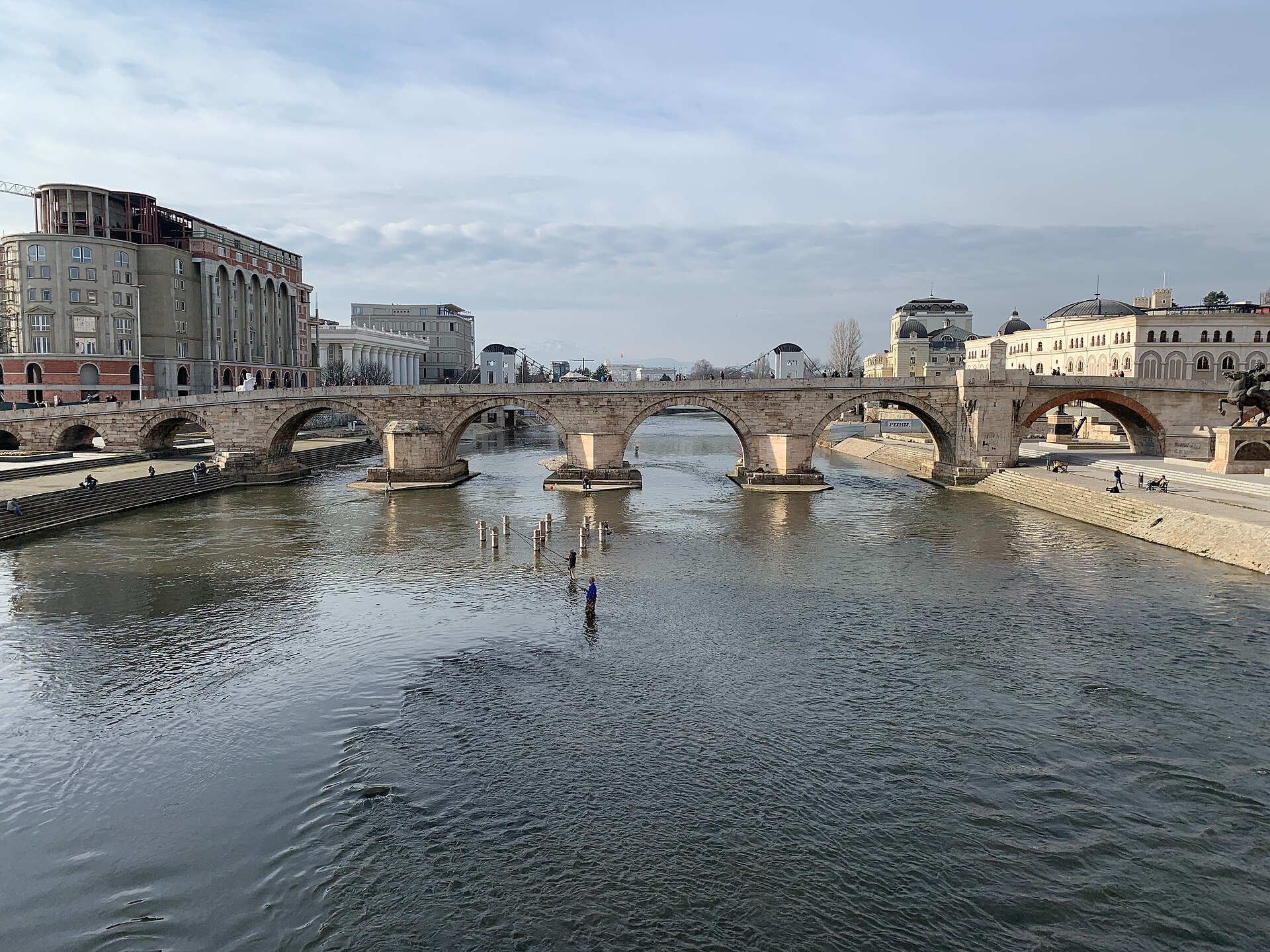
Skopje makes most sense when you accept that it is two very different cities occupying the same space, separated only by the Vardar river and the Stone Bridge. The Old Bazaar (Čaršija) on the north bank is one of the largest surviving Ottoman-era bazaars in the Balkans after Istanbul's Grand Bazaar. The lanes hold working craftsmen, mosques dating to the 15th century including the Mustafa Pasha Mosque and the colorful Šarena Džamija (Painted Mosque) in nearby Tetovo, and the Bit Pazar fresh market. It functions as an active trading center rather than a preserved exhibit.
Cross the Stone Bridge to the south bank and the context changes entirely. Skopje 2014 was a government urban program that placed neoclassical and baroque-style statues, facades, and monuments across the central zone between 2010 and 2014. The most visible result is Macedonia Square with the large equestrian statue of the Warrior on a Horse (officially unnamed but widely understood as Alexander the Great), surrounded by dancing fountains and flanked by monumental government buildings given classical facades. The project is openly controversial — criticized by architects, economists, and many residents for the cost and the visual incongruity — but it is also unlike anything in any other European capital, which makes it interesting whether or not you admire it.
Vodno Hill rises immediately south of the city. The Millennium Cross at the summit is 66 metres tall and visible from most points in Skopje. A cable car runs to the upper station near the cross (the lower section has been periodically unreliable; the upper section from the mid-station tends to operate more consistently). Matka Canyon, 15km west of the center, is a river gorge with boat tours into caves, kayaking, and hiking trails through karst landscape. It is the strongest natural half-day addition to a Skopje stay and is easily combined with the cable car into a full day outside the city.
Still deciding if Skopje is the right base overall? Open the full Skopje destination guide first, then come back here to compare neighborhoods and properties.
Best neighborhoods
Macedonia Square Area
The Macedonia Square area is the most central Skopje base -- the fountain statue, the Stone Bridge, and easy walking to both the modern city and the Old Bazaar across the river. Hotels here cost 50 to 90 EUR per night. Best for: first-time visitors who want straightforward orientation and easy access to both halves of the city.
Old Bazaar Edge
The Old Bazaar edge, on the north bank of the Vardar, is the most atmospheric Skopje base. Staying here puts the mosque lanes, artisan workshops, and traditional restaurants within immediate walking distance. Guesthouses cost 40 to 75 EUR per night. Best for: travelers who want more texture and older character than the modern city centre offers.
Debar Maalo
Debar Maalo is a lively residential neighborhood south of the centre with good cafes, bars, and a younger local atmosphere. A 15-minute walk to the main sights. Apartments and guesthouses cost 40 to 70 EUR per night. Best for: travelers who want nightlife, cafe culture, and a more local Skopje neighborhood.
City Park Side
The City Park side is a quiet area adjacent to the main Skopje park, with easier walking and a calmer feel than the busiest square zone. Hotels cost 45 to 80 EUR per night. Best for: travelers who want a simple, calm base with good green space access.
How to choose the right base in Skopje
The best place to stay in Skopje depends less on star rating and more on the shape of the trip. If you want atmosphere first, staying near Macedonia Square Area is often the cleanest answer. If you care more about sleep quality, easier arrivals, or slightly better value, Old Bazaar Edge or a comparable nearby area usually works better. The goal is not to book the objectively best hotel. The goal is to book the base that matches your pace.
Common booking mistakes to avoid
The most common mistake is choosing a property only because the nightly rate looks attractive, while ignoring how the location changes the trip. In Skopje, that often leads to extra transfers, weaker evening atmosphere, or a stay that feels less aligned with the reason you chose the city in the first place. A second common mistake is leaving the booking too late, especially if the most useful neighborhoods only have a handful of strong-value options.