
Why Ljubljana works well over three days
Ljubljana is compact enough that its center can be covered in a single focused afternoon, which makes it tempting to treat as a one-night stop on a wider Slovenia or Balkans route. That works, but it misses the city at its best — the morning market on the Ljubljanica embankment, the quieter residential streets above Gornji Trg in the early evening, and the different quality the city acquires when you stop rushing through it. Three days gives you the city itself on day one, a deeper architectural walk on day two, and flexibility on day three for either a day trip or a slower final morning.
Day one: Dragon Bridge, Triple Bridge, and Ljubljana Castle
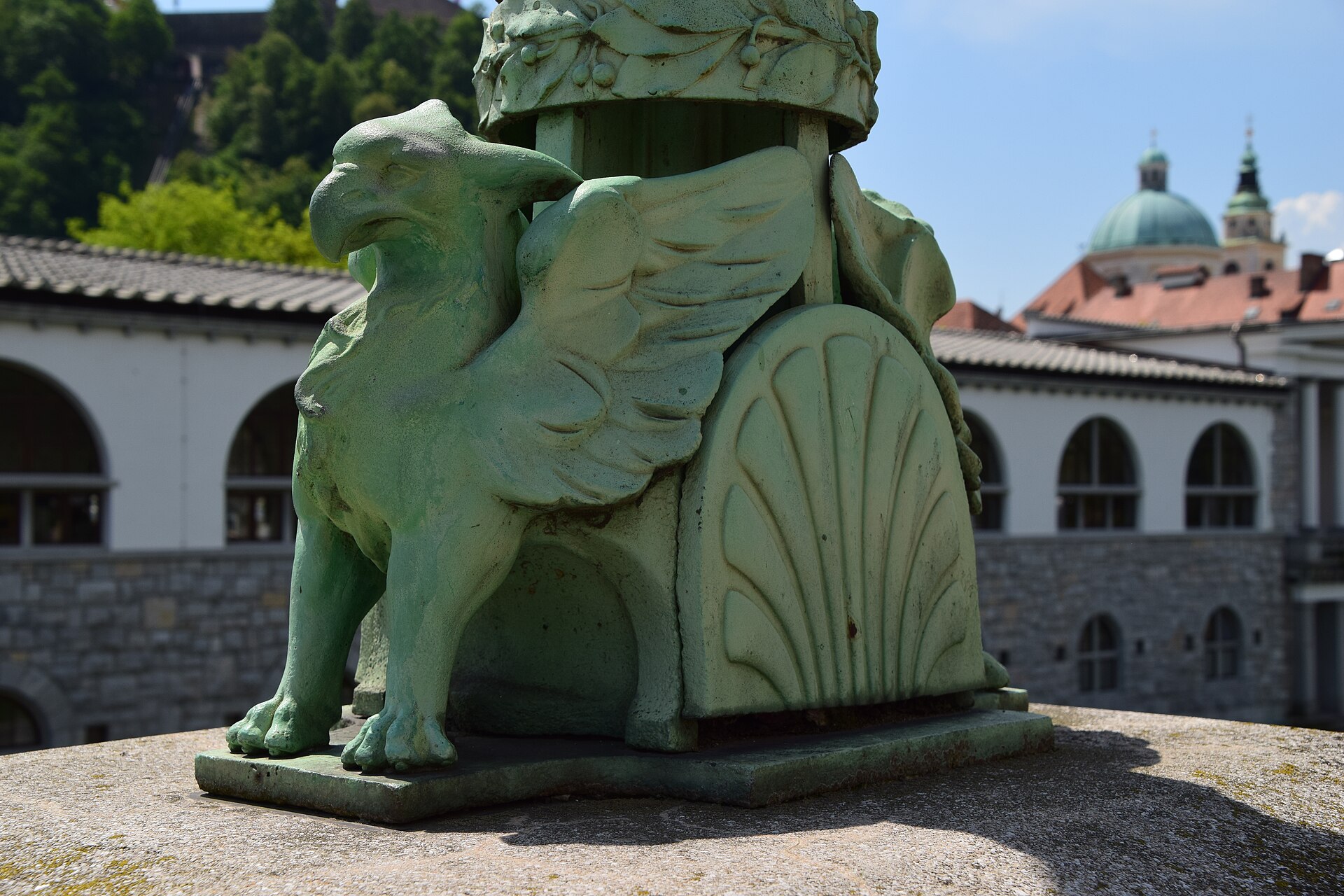
The obvious first-day circuit starts at Dragon Bridge — the 1901 Art Nouveau crossing with four bronze dragons at the corners that have become the symbol of the city — and follows the Ljubljanica river south to Triple Bridge (Tromostovje). The Triple Bridge is the main work of Jože Plečnik in the city center: a single stone bridge given two flanking pedestrian spans in 1931. The effect is unusual and worth stopping to understand rather than walking through without attention.
The central market runs along the eastern embankment between the Dragon Bridge and the Triple Bridge. It opens Monday to Saturday, busiest before noon, and sells seasonal produce, local cheese, and Slovenian specialties. The covered fish market section below the main colonnade is a Plečnik design from the 1940s.
In the afternoon, take the funicular to Ljubljana Castle (€4 return from the center) or walk the forested path above Gornji Trg — about 30 minutes on foot. The castle panorama covers 360 degrees over the city and surrounding hills. The virtual reality tour inside the castle gives a well-done visual history of the site. Come down as the light changes and find a table on Stari Trg or one of the old-town streets for dinner.
Day two: following Plečnik through Ljubljana
Jože Plečnik worked in Ljubljana from 1921 to 1957 and left a body of public architecture that is entirely coherent and entirely unlike anywhere else. A half-day following his buildings creates a genuinely interesting urban walk. Start at the National and University Library (1941) — the exterior is rough stone; the interior marble staircase changes dramatically as your eyes adjust from dark to light, which Plečnik designed deliberately. Continue to the covered market colonnade along the river, the Šuštarski Most (Cobblers' Bridge), and the Plečnik Arcade at the east end of the market.
In the afternoon, the Metelkova district — 15 minutes northeast of the train station — is worth an hour. The former Yugoslav military barracks were taken over by artists after independence and converted into an autonomous cultural zone: galleries, alternative music venues, and outdoor murals that give the area a character completely different from the polished center. It is more active in the evenings, but the murals and architecture are visible during the day.
Day three: Bled day trip or slow morning
The most popular day-three option from Ljubljana is Bled, 55km northwest. Hourly buses from the central bus station make the trip in about 1.5 hours. A focused Bled half-day covers the pletna boat to the island church, a walk of the lake circuit, and the kremsnita cream cake at one of the waterfront cafes, returning to Ljubljana in the afternoon. This works particularly well if you are based in Ljubljana and want to add the lake without the cost of Bled accommodation.
The alternative is a slower Ljubljana morning: the Tivoli Park above the city for a forest walk, the Museum of Contemporary History at its edge, and a long lunch at one of the Old Town restaurants that fills up by noon with local workers. Either option leaves room for an afternoon at the outdoor terraces along the Ljubljanica before a late departure.
Practical Ljubljana notes
Ljubljana uses the Euro. The center is largely pedestrianized and walkable without any transport. The city card (Ljubljana Card) covers the funicular, some museum entries, and unlimited bus travel — worth it for a 48-72 hour stay if you plan to use several of those inclusions. The airport is 25km from the center; the Airportshuttle bus is cheaper than a taxi and takes about 45 minutes.