Why visit Split?
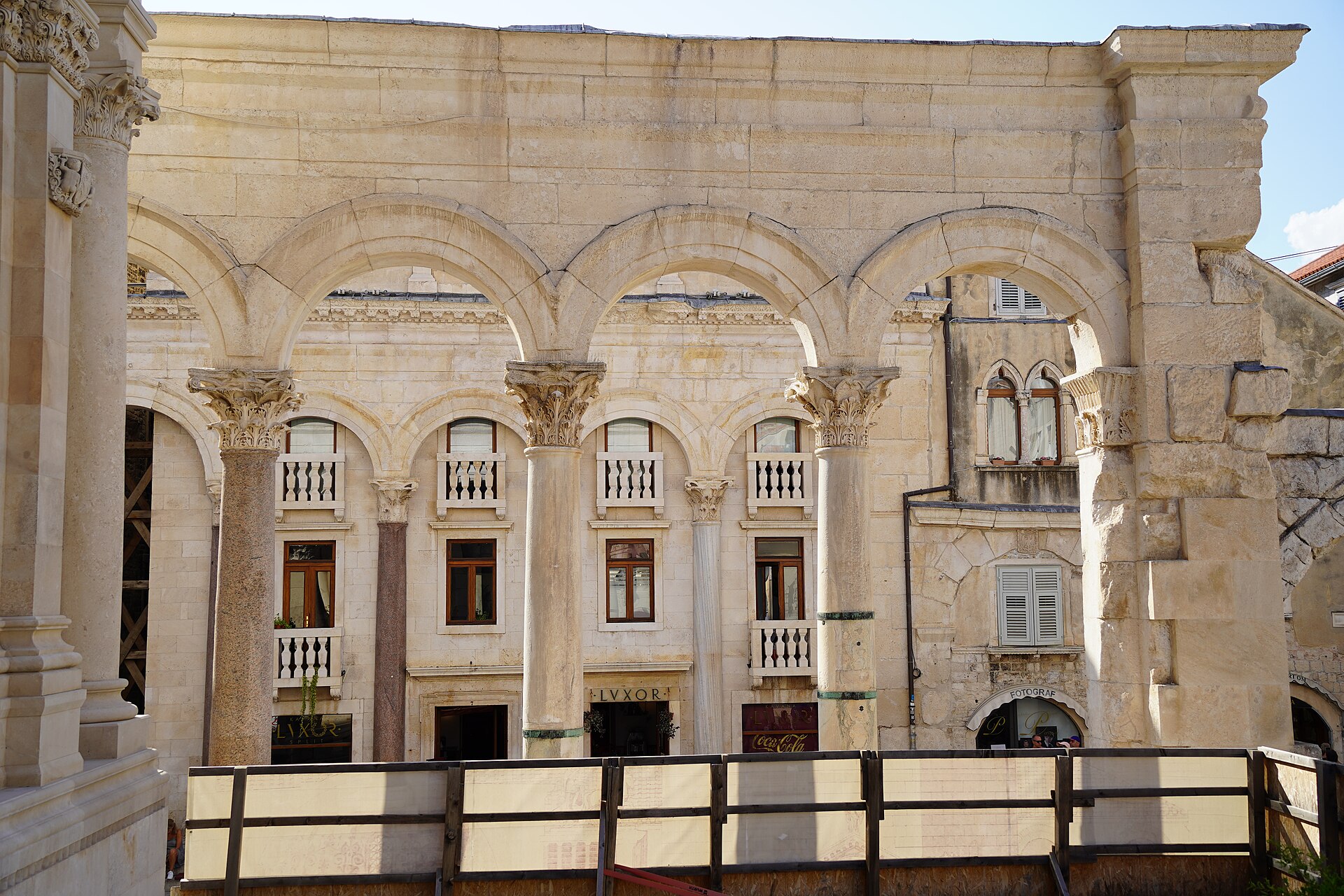
Diocletian's Palace is the reason Split exists and the reason it holds attention past a single day. Built around 305 AD as a retirement complex for the Roman emperor Diocletian, it was so well-constructed that people moved in after the empire collapsed and never left. Today around 3,000 people still live within the palace walls. The basement halls underneath the main level are open for entry (€9) and give the clearest sense of the original structure — the vaulted cellars remain intact and the scale of what Diocletian built is impressive even without theatrical staging. The Peristyle square above and the Cathedral of Saint Domnius (Diocletian's mausoleum, converted to a church in the 7th century) are accessible at street level without a ticket.
Marjan Hill is the forested ridge that frames the city to the west. The climb from the Varoš neighborhood at the base takes 20-30 minutes to reach the first viewpoints, with higher vantage points further along the ridge. It is free to access, used by locals for morning exercise, and gives the best elevated view of the old town, the harbor, and the islands to the south. Most visitors miss it because it is not in the standard center circuit.
Split is also the practical ferry hub for the Dalmatian islands. Multiple daily Jadrolinija departures serve Hvar Town (50 minutes to 1 hour), Supetar on Brač (50 minutes), and Vis (2 hours 20 minutes). Day trips to Hvar are the most common addition to a Split stay. The ferry terminal sits a 10-minute walk from the palace entrance, making island connections clean and easy to organize without dedicated planning.
Need the practical booking angle next? Compare the best areas to stay in Split or keep browsing our Balkan travel guides before you book.
Airport
Split Airport
Currency
EUR
Ideal Trip
3-4 days
Trip Style
City + coast combo
Best for
Travelers combining city life with island access, Croatia coastal route builders, families, couples, history enthusiasts, and anyone wanting Dalmatia's most practical and atmospheric base.
Best time to visit
May, June, and September are the strongest months. July and August are peak season with maximum crowds and prices but also the warmest water and most frequent ferry connections. October is good for the city, quieter for islands.
Best areas to stay
Old Town Core
The Old Town Core inside and immediately around Diocletian's Palace is the most atmospheric Split base. The Peristyle square, the Cathedral of Saint Domnius, and the Riva waterfront are within a 5-minute walk. Hotels and apartments inside the palace cost 90 to 200 EUR per night in peak season. Best for: first-time visitors, couples, history enthusiasts, and anyone who wants to be inside one of the most remarkable inhabited ancient structures in the world.
Bacvice
Bacvice is a residential area about 15 minutes walk south of Diocletian's Palace, near Split's most popular city beach. Good for travelers who want beach access as part of the daily routine without being in the densest tourist zone. Hotels here cost 80 to 150 EUR per night. Best for: beach-focused travelers and families.
Veli Varos
Veli Varos is a historic neighborhood immediately west of the palace walls with older stone buildings, a quieter atmosphere than the palace core, and some of the best-value apartments in central Split. Accommodation runs 70 to 130 EUR per night. Best for: travelers who want old-town access with more character and breathing room than the busiest palace blocks.
Znjan Side
Znjan is a more modern seaside area east of the centre with good beaches and larger hotels. Requires a bus or taxi (about 15 to 20 minutes) to reach Diocletian's Palace. Hotels cost 80 to 160 EUR per night. Best for: families who want beach-led Split and do not mind the transit to the old town.
Things to do
Anchor the trip around the palace and waterfront
That combination is the easiest way to understand why Split works so well for a flexible short break.
Choose whether your mood is city-first or beach-first
The right accommodation area helps Split feel much more intentional.
Use one relaxed evening by the sea
Split tends to perform best when you mix logistics, food, and easy coastal downtime.
How many days work best in Split?
Split is usually strongest when travelers plan roughly 3-4 days and then build the stay around one clear trip style instead of trying to force every possible sight into the schedule. In practice, the better approach is to choose the right neighborhood, keep the daily rhythm realistic, and leave room for food, walking, and one slower part of the day. That is usually what turns a city from a checklist stop into a place that actually feels memorable.
What first-time visitors should prioritize
For a first visit, the smartest strategy is usually to make location decisions early and activity decisions later. Travelers often overthink the day plan and underthink the base. In Split, the right area usually shapes whether the trip feels walkable, polished, and easy or slightly harder than it needs to be. Once the base is correct, the rest of the trip tends to fall into place much more naturally.
Easy itinerary pairings
If Split is only one stop in a wider Balkans route, two of the cleanest pairings are Dubrovnik if the trip is coast-first and Zagreb if you want one urban and one coastal base in Croatia. The best pairing depends on whether you want the next stop to raise the energy, slow the pace down, or add a stronger scenic contrast. That kind of contrast usually creates a better multi-stop trip than choosing two cities that feel too similar.