
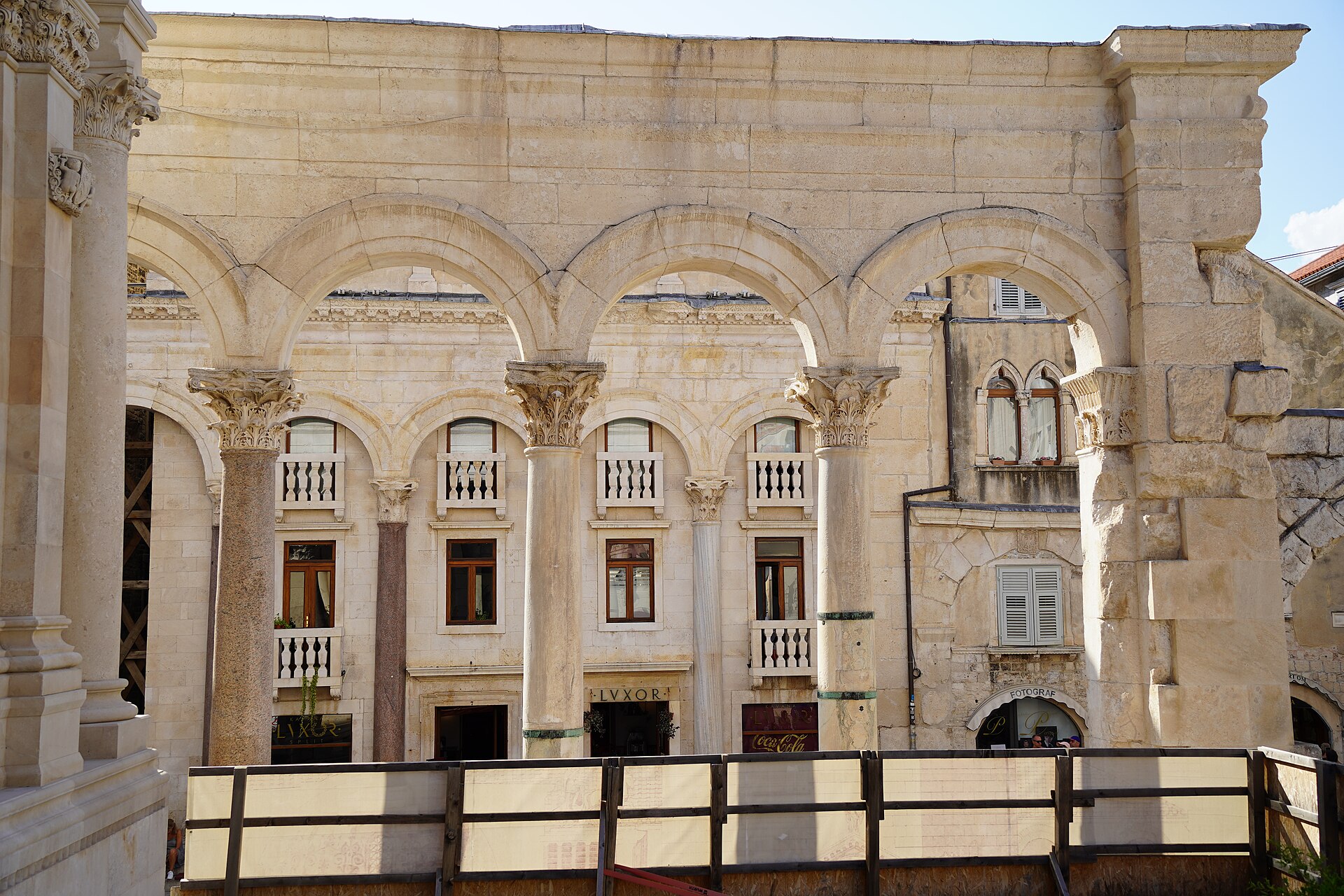
Split is worth visiting for a short trip -- but the quality of the experience depends significantly on how the trip is structured. Used purely as a city break, two or three nights covers the main highlights well. Used as a base for island trips, it becomes one of the most flexible and rewarding hubs on the entire Adriatic coast. Getting that distinction right before you book makes the trip significantly better.
What makes Split genuinely worth visiting
Diocletian's Palace is one of the most remarkable inhabited ancient structures anywhere in Europe. Built in the early 4th century as a retirement residence for the Roman Emperor Diocletian, it was not abandoned after his death but colonized by residents who have been living inside it continuously ever since. Today, the palace walls contain apartments, cafes, restaurants, shops, a cathedral (originally Diocletian's mausoleum -- one of the oldest functioning churches in the world), and a warren of lanes that feel completely unlike any other Roman site. It is not a ruin to walk around -- it is a living urban space that happens to be inside a Roman emperor's palace.
The Riva waterfront -- the long pedestrian promenade along the water's edge just outside the palace walls -- is one of the most pleasant evening walks on the Adriatic. The view from it, looking back at the palace walls with the sea in front, is the defining image of Split.
Beyond the palace, Marjan Hill (a large forested peninsula on the western edge of the city) gives panoramic views over the islands on the horizon and provides the best free viewpoint in Split after a 30 to 40 minute uphill walk from the old town.
The island access argument
Split's strongest card for most travelers is what it unlocks. Hvar is under 2 hours by catamaran (roughly 10 to 15 EUR each way). Brac, with the famous Zlatni Rat sand spit beach, is 50 minutes by car ferry (about 6 EUR per person). Korcula, a walled island town sometimes compared to a smaller Dubrovnik, is about 3 hours away. All connections leave from the ferry terminal immediately adjacent to the old town.
For travelers who want Adriatic island time as part of the trip, Split is the most practical hub. Basing yourself in Split for two nights and adding one or two island overnights gives you the old town, the island experience, and flexible logistics without needing to move your main luggage repeatedly.
Who Split suits best
Split works for almost every type of traveler, which is why it is consistently one of the most visited cities on the Adriatic. It works particularly well for: travelers who want old town atmosphere with island access; families who want flexibility between history and beach; couples who want two to three nights of city break followed by an island; solo travelers who want the social atmosphere of a busy port city; and anyone connecting through the coast between Dubrovnik and Zagreb.
How many days to spend
Two nights covers the city itself. Three nights gives you one day trip to an island plus full city coverage. Four to five nights allows for one or two island overnights plus the city. See the separate days guide for a detailed day-by-day breakdown.
When to visit
May, June, and September are the best months. July and August are peak season -- the old town is busy and prices are at their highest, but the ferry connections to islands are at their most frequent and the sea is at its warmest. October is good for the city and shoulder season crowds but ferry schedules reduce. November through April is off-season for the coast and many island restaurants and accommodation close.