Why visit Kotor?
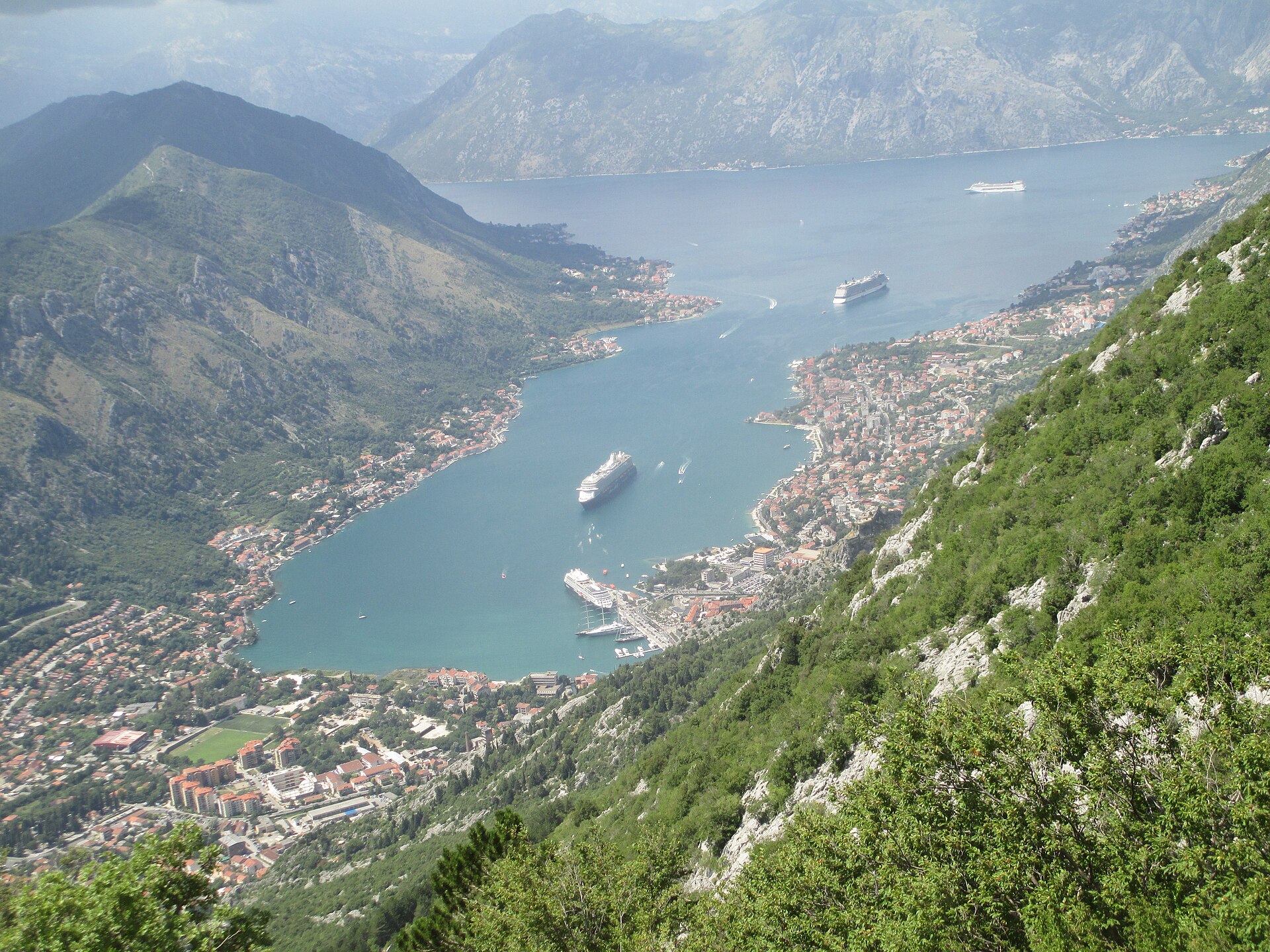
Kotor's old town sits inside medieval walls at the base of steep limestone cliffs. The walls connect to St John's Fortress high above the town — the climb involves approximately 1,355 steps and takes 40-50 minutes at a moderate pace. It is steep, often hot in summer, and completely worth it. The view from the top shows the full sweep of the Bay of Kotor, the red rooftops below, and on clear days the mountains extending toward Albania to the south. Entrance to the walls and fortress is €8. The walk is best done early morning or late afternoon to avoid the worst heat and the cruise ship crowds.
Inside the old town, the streets are narrow enough that two people walking side by side occupy the full width. The Cathedral of Saint Tryphon dates to 1166 and is the city's most significant building. Kotor has a well-documented relationship with cats — they have lived inside the walls for centuries and appear in local heraldry. There is a small Cat Museum tucked into the old town, and at least a dozen cats are visible on any given block within the first hour of walking. It sounds like a tourist note but it is genuinely part of the city's character.
The bay itself (Boka Kotorska) is sometimes described as the southernmost fjord in Europe. Technically it is a submerged river canyon rather than a glacier-carved fjord, but the enclosed scale and the way the water reflects the surrounding mountains make the comparison understandable. The most dramatic combined view of the bay and town together is from the switchback road above Kotor on the way toward Cetinje. The overlooks are worth stopping rather than photographing from a moving vehicle.
Need the practical booking angle next? Compare the best areas to stay in Kotor or keep browsing our Balkan travel guides before you book.
Airport
Tivat Airport
Currency
EUR
Ideal Trip
2-4 days
Trip Style
Scenic bay escape
Best for
Couples, first-time Montenegro visitors, photographers, travelers who want the single most visually striking stop in the western Balkans, and anyone building a Montenegro coastal route.
Best time to visit
May, June, September, and October are significantly better than July and August. The setting is identical but the crowds, heat, and cruise ship impact are dramatically reduced. October has particularly good light and the beginning of autumn colour on the surrounding mountains.
Best areas to stay
Kotor Old Town
Kotor Old Town is the walled medieval city at the bay's edge -- the most atmospheric base in Montenegro. Staying inside the walls means the Cathedral of Saint Tryphon, the fortress path, and the evening waterfront are within a few minutes walk. Hotels run 80 to 180 EUR per night in peak season. Best for: couples, first-time visitors, and anyone who wants Kotor's atmosphere to shape the entire stay.
Dobrota
Dobrota is a small village about 2 kilometers north of Kotor old town along the bay shore. Calmer than the old town, with bay views, easier parking, and a more relaxed pace. Hotels and guesthouses run 70 to 130 EUR per night. Best for: travelers who want bay scenery without old-town noise, families, and anyone driving through Montenegro.
Muo Bay Side
Muo is a small fishing village on the bay, about 1.5 kilometers from Kotor by water taxi or a short drive. Very quiet with genuine bay views and a pace that feels completely removed from the tourist town. Accommodation is limited but costs 60 to 110 EUR per night. Best for: travelers who specifically want a quiet bay-side experience rather than old-town immersion.
Prcanj Side
Prcanj is a larger village further along the bay from Kotor, with more accommodation options, full bay views, and a very local feel. About 4 kilometers from Kotor old town. Hotels and apartments run 55 to 100 EUR per night. Best for: travelers who want the bay setting at lower prices than the old town zone.
Things to do
Use the bay scenery as part of the plan
Kotor is one of the few destinations where the visual setting is one of the main activities.
Stay close enough for early or late old-town time
Those quieter hours usually shape whether Kotor feels special or simply crowded.
Keep the pace lighter than in a big city
Kotor usually rewards a scenic, slower rhythm more than aggressive sightseeing.
How many days work best in Kotor?
Kotor is usually strongest when travelers plan roughly 2-4 days and then build the stay around one clear trip style instead of trying to force every possible sight into the schedule. In practice, the better approach is to choose the right neighborhood, keep the daily rhythm realistic, and leave room for food, walking, and one slower part of the day. That is usually what turns a city from a checklist stop into a place that actually feels memorable.
What first-time visitors should prioritize
For a first visit, the smartest strategy is usually to make location decisions early and activity decisions later. Travelers often overthink the day plan and underthink the base. In Kotor, the right area usually shapes whether the trip feels walkable, polished, and easy or slightly harder than it needs to be. Once the base is correct, the rest of the trip tends to fall into place much more naturally.
Easy itinerary pairings
If Kotor is only one stop in a wider Balkans route, two of the cleanest pairings are Budva if the trip also needs easier beach access and Dubrovnik if you want a scenic Adriatic short route. The best pairing depends on whether you want the next stop to raise the energy, slow the pace down, or add a stronger scenic contrast. That kind of contrast usually creates a better multi-stop trip than choosing two cities that feel too similar.