Quick introduction
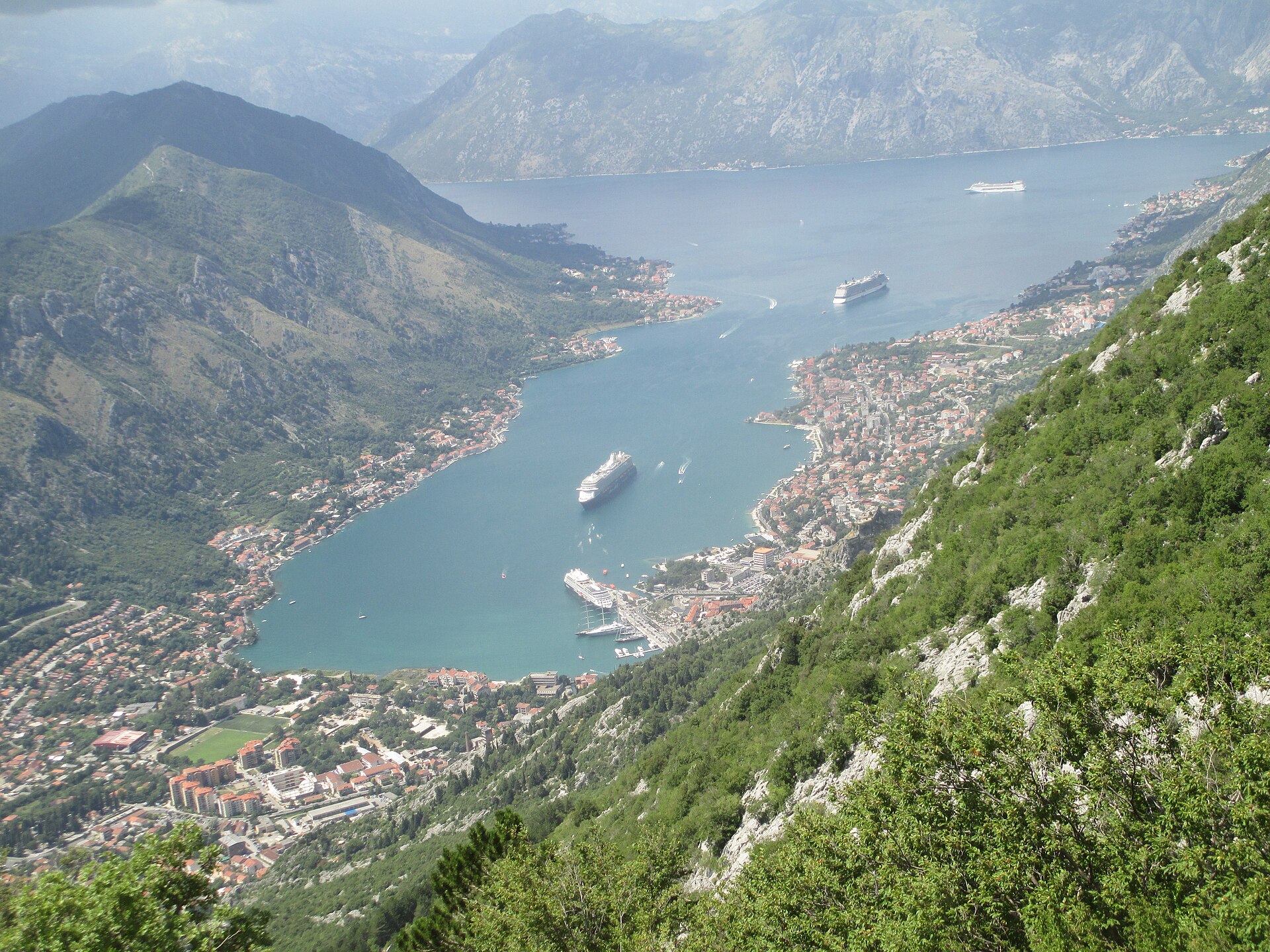
Kotor's old town sits inside medieval walls at the base of steep limestone cliffs. The walls connect to St John's Fortress high above the town — the climb involves approximately 1,355 steps and takes 40-50 minutes at a moderate pace. It is steep, often hot in summer, and completely worth it. The view from the top shows the full sweep of the Bay of Kotor, the red rooftops below, and on clear days the mountains extending toward Albania to the south. Entrance to the walls and fortress is €8. The walk is best done early morning or late afternoon to avoid the worst heat and the cruise ship crowds.
Inside the old town, the streets are narrow enough that two people walking side by side occupy the full width. The Cathedral of Saint Tryphon dates to 1166 and is the city's most significant building. Kotor has a well-documented relationship with cats — they have lived inside the walls for centuries and appear in local heraldry. There is a small Cat Museum tucked into the old town, and at least a dozen cats are visible on any given block within the first hour of walking. It sounds like a tourist note but it is genuinely part of the city's character.
The bay itself (Boka Kotorska) is sometimes described as the southernmost fjord in Europe. Technically it is a submerged river canyon rather than a glacier-carved fjord, but the enclosed scale and the way the water reflects the surrounding mountains make the comparison understandable. The most dramatic combined view of the bay and town together is from the switchback road above Kotor on the way toward Cetinje. The overlooks are worth stopping rather than photographing from a moving vehicle.
Still deciding if Kotor is the right base overall? Open the full Kotor destination guide first, then come back here to compare neighborhoods and properties.
Best neighborhoods
Kotor Old Town
Kotor Old Town is the walled medieval city at the bay's edge -- the most atmospheric base in Montenegro. Staying inside the walls means the Cathedral of Saint Tryphon, the fortress path, and the evening waterfront are within a few minutes walk. Hotels run 80 to 180 EUR per night in peak season. Best for: couples, first-time visitors, and anyone who wants Kotor's atmosphere to shape the entire stay.
Dobrota
Dobrota is a small village about 2 kilometers north of Kotor old town along the bay shore. Calmer than the old town, with bay views, easier parking, and a more relaxed pace. Hotels and guesthouses run 70 to 130 EUR per night. Best for: travelers who want bay scenery without old-town noise, families, and anyone driving through Montenegro.
Muo Bay Side
Muo is a small fishing village on the bay, about 1.5 kilometers from Kotor by water taxi or a short drive. Very quiet with genuine bay views and a pace that feels completely removed from the tourist town. Accommodation is limited but costs 60 to 110 EUR per night. Best for: travelers who specifically want a quiet bay-side experience rather than old-town immersion.
Prcanj Side
Prcanj is a larger village further along the bay from Kotor, with more accommodation options, full bay views, and a very local feel. About 4 kilometers from Kotor old town. Hotels and apartments run 55 to 100 EUR per night. Best for: travelers who want the bay setting at lower prices than the old town zone.
How to choose the right base in Kotor
The best place to stay in Kotor depends less on star rating and more on the shape of the trip. If you want atmosphere first, staying near Kotor Old Town is often the cleanest answer. If you care more about sleep quality, easier arrivals, or slightly better value, Dobrota or a comparable nearby area usually works better. The goal is not to book the objectively best hotel. The goal is to book the base that matches your pace.
Common booking mistakes to avoid
The most common mistake is choosing a property only because the nightly rate looks attractive, while ignoring how the location changes the trip. In Kotor, that often leads to extra transfers, weaker evening atmosphere, or a stay that feels less aligned with the reason you chose the city in the first place. A second common mistake is leaving the booking too late, especially if the most useful neighborhoods only have a handful of strong-value options.