
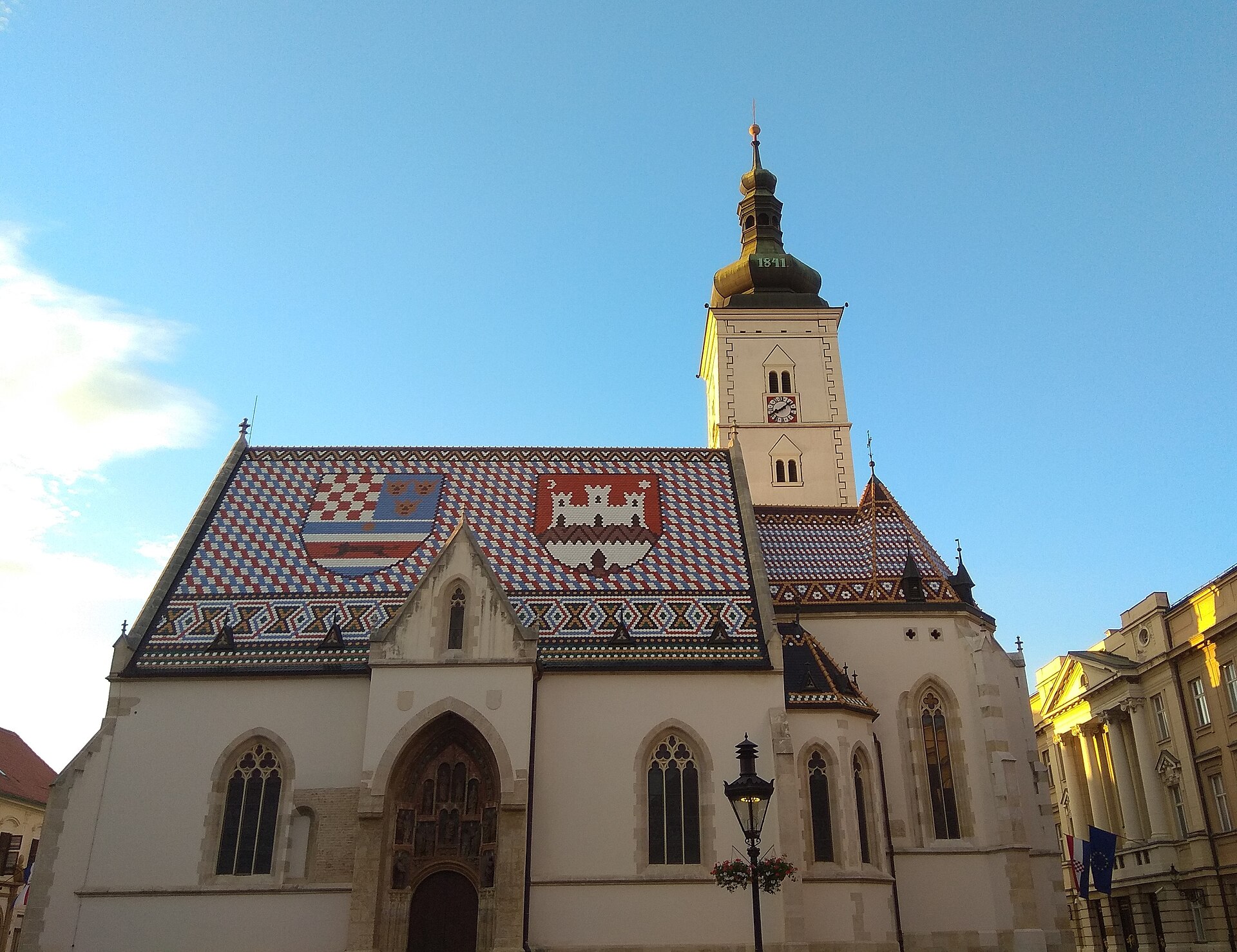
Zagreb is consistently underestimated. Most travelers pass through it en route to the Dalmatian coast or Slovenia without stopping, which means the city has a reputation for being a transit stop rather than a destination. That reputation is wrong. Zagreb is one of the most rewarding short city breaks in Central Europe, and most travelers who give it a proper two to three nights come away surprised by how much they liked it.
What Zagreb does well
The upper town (Gornji Grad) is the historic heart of the city and genuinely attractive -- St. Mark's Church with its tiled roof, the Lotrscak Tower, the funicular that connects the upper and lower town (one of the shortest public funiculars in the world). It is compact enough to see in a morning and charming enough to return to in the evening.
The lower town (Donji Grad) has some of the best museums in the region. The Museum of Broken Relationships is genuinely moving and unlike anything else in Europe -- a collection of objects donated by people from ended relationships, each with a short story. The Archaeological Museum and the Museum of Arts and Crafts are also strong. Plan for at least two museum visits if culture is part of the point.
The food and coffee scene in Zagreb is quietly excellent. The Dolac market (open every morning except Sunday) is one of the most pleasant fresh markets in the region -- arrive before 9am for the best selection. The cafe culture on the pedestrian Tkalciceva Street and in the streets around it is strong. Zagreb does brunch well, which is rarer in the Balkans than you might expect.
The weekend antique and vintage market at Britanski Trg (every Sunday morning) is one of the best in the region if that is your thing.
What the weekend looks like
Day 1: Arrive and start in the upper town. St. Mark's Square, the Lotrscak Tower, the view over the city from the top. Take the funicular down and walk through the lower town. Find a good lunch spot near Tkalciceva Street. Afternoon: the Museum of Broken Relationships (allow 1.5 to 2 hours). Evening: dinner somewhere good -- Zagreb has a solid range of Croatian cuisine restaurants in the Gornji Grad and Gornji Grad fringes.
Day 2: Dolac market in the morning (early -- most stalls pack up by noon). Coffee on Tkalciceva. If the weather is good, the Jarun Lake area on the western edge of the city is a pleasant half-day -- a popular local spot with walking paths and cafes around a large artificial lake. If culture is the priority, the Archaeological Museum or the Gallery of Modern Art in the afternoon. Dinner at a good restaurant and a final evening walk through the upper town.
Day trip option: Plitvice Lakes
Plitvice Lakes National Park is about 2 hours from Zagreb by bus and is one of the most spectacular natural sites in Croatia -- a series of terraced lakes connected by waterfalls, with boardwalk paths through the water. It is UNESCO-listed and genuinely extraordinary, particularly in May and June when water levels are high.
A day trip from Zagreb to Plitvice is a well-established route. Buses depart from the main Zagreb bus station (Autobusni Kolodvor) and cost about 10 to 15 EUR each way. The park entry fee is seasonal -- roughly 20 to 40 EUR depending on the month. Allow 3 to 4 hours in the park for the main routes. Return to Zagreb in the evening.
This day trip works well on a three-night Zagreb visit. It is less practical on a two-night visit where it would use an entire day and leave only one day for the city itself.
Who Zagreb suits best
Zagreb works particularly well for couples who want a relaxed, polished European city break without the extreme crowds of Prague or Vienna. It suits food-focused travelers, museum-goers, and anyone who appreciates good coffee culture. It works less well for travelers who want nightlife as the primary activity -- Zagreb has good bars but nothing on the scale of Belgrade's scene.
It is also a very good first Balkans destination for travelers who want to ease into the region rather than jumping straight into the more intense energy of Belgrade or Sarajevo.
Cost expectations
Zagreb is more expensive than other Balkans cities. A mid-range hotel in the centre costs 100 to 170 EUR per night. A good lunch runs 15 to 25 EUR per person. Dinner at a solid restaurant is 20 to 35 EUR per person. It is comparable to mid-range Western European cities rather than the budget-friendly Balkans of Belgrade or Sarajevo. Budget accordingly and the quality is there to justify it.