Why visit Zagreb?
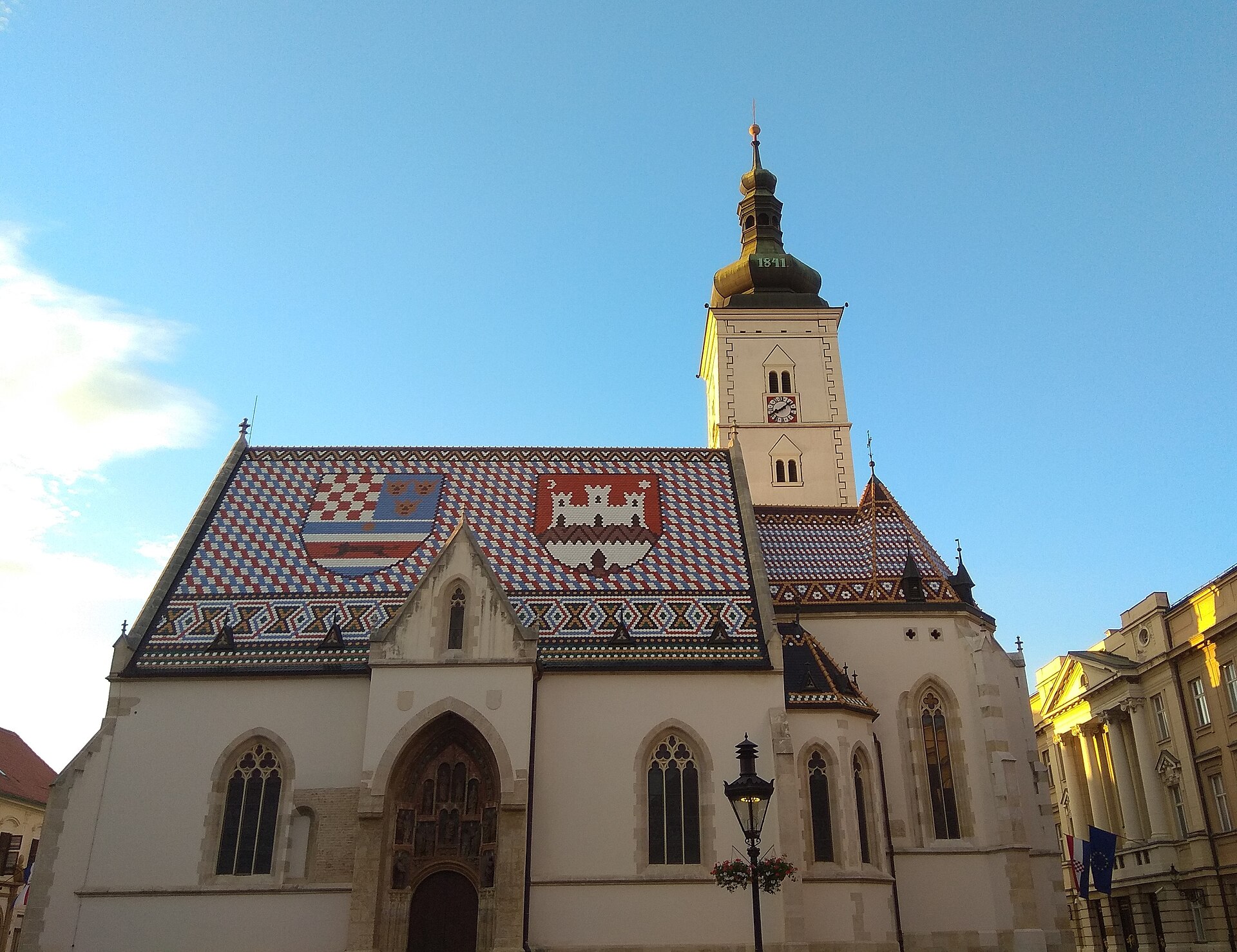
Zagreb divides naturally into two levels. Gornji Grad (Upper Town) holds the oldest part of the city — St Mark's Church with the distinctive tiled roof showing the Croatian coat of arms and the Slavonian shield, the Lotrščak Tower, and the city's original medieval layout. Getting there is done by the Uspinjača funicular, which runs 66 metres on a gradient of 52 degrees and takes under a minute. It has been running since 1890 and is commonly cited as one of the world's shortest public cable cars. A single ride costs around 0.66 EUR and is worth taking at least once.
Dolac market sits just below, at the transition point between upper and lower town. It opens Monday to Saturday, with the outdoor section busiest before noon. The stalls sell seasonal fruit, vegetables, local cheese, and produce brought in from Dalmatia. This is where Zagreb locals shop, which makes it feel functional rather than curated. The covered indoor section below the main terrace holds meat and dairy.
Tkalčićeva street is where most of the outdoor terrace culture happens. The street is pedestrianized, cafe-dense, and busiest on weekend evenings from late afternoon onward. The Museum of Broken Relationships on the edge of Gornji Grad has collected donated objects from ended relationships and the handwritten texts explaining each one. It consistently surprises visitors who arrive expecting a novelty exhibit and leave having found something more considered. Zagreb also has several excellent rooftop bars on hotels and commercial buildings in the Donji Grad (Lower Town) area — a different city mood than the terrace streets.
Need the practical booking angle next? Compare the best areas to stay in Zagreb or keep browsing our Balkan travel guides before you book.
Airport
Zagreb Airport
Currency
EUR
Ideal Trip
2-3 days
Trip Style
Elegant city break
Best for
First-time Croatia visitors, couples, museum enthusiasts, food and cafe culture lovers, and travelers who want a polished city break at prices below Western European equivalents.
Best time to visit
April through June and September through October give the most comfortable walking weather and the best balance of open attractions and manageable crowds. December has one of the best Advent markets in Central Europe but also high accommodation demand.
Best areas to stay
Upper Town Edge
The upper town edge (Gornji Grad fringe) is the most atmospheric base in Zagreb -- near St. Mark's Church, the Lotrscak Tower, and the historic streets of the upper town. Boutique hotels and apartments here run 90 to 160 EUR per night. Best for: couples, travelers who want Zagreb to feel historic and characterful from the first evening.
Lower Town
Lower Town (Donji Grad) is the main commercial zone with the best concentration of hotels, the Dolac market, tram access, and the Museum of Broken Relationships nearby. The most practical first-time base. Hotels cost 90 to 160 EUR per night. Best for: first-time visitors, anyone using Zagreb as a route hub, travelers who want easy transport and maximum restaurant options.
Kaptol
Kaptol is a quiet area immediately adjacent to the Cathedral and the upper town, with a local residential character. Slightly removed from the busiest tourist streets but within easy walking distance of everything. Hotels and apartments run 80 to 140 EUR per night. Best for: travelers who want historic access without staying in the most tourist-heavy blocks.
Britanski Trg Side
Britanski Trg is a neighborhood with one of Zagreb's best Sunday antique and vintage markets. More local in feel than the immediate centre, with good cafes and easy tram access to the main sights. Apartments cost 70 to 120 EUR per night. Best for: travelers who want a neighborhood feel and easy access to local daily life.
Things to do
Split your time between Upper and Lower Town
That pairing gives you both historic charm and the cleaner capital-city rhythm Zagreb does well.
Prioritize cafe culture
A lot of Zagreb's appeal comes from how easy it is to enjoy unplanned terrace time between sights.
Treat it like an elegant weekend break
Zagreb usually works better as a polished short city trip than as an overpacked sightseeing challenge.
How many days work best in Zagreb?
Zagreb is usually strongest when travelers plan roughly 2-3 days and then build the stay around one clear trip style instead of trying to force every possible sight into the schedule. In practice, the better approach is to choose the right neighborhood, keep the daily rhythm realistic, and leave room for food, walking, and one slower part of the day. That is usually what turns a city from a checklist stop into a place that actually feels memorable.
What first-time visitors should prioritize
For a first visit, the smartest strategy is usually to make location decisions early and activity decisions later. Travelers often overthink the day plan and underthink the base. In Zagreb, the right area usually shapes whether the trip feels walkable, polished, and easy or slightly harder than it needs to be. Once the base is correct, the rest of the trip tends to fall into place much more naturally.
Easy itinerary pairings
If Zagreb is only one stop in a wider Balkans route, two of the cleanest pairings are Ljubljana for an especially easy polished two-city route and Split or Dubrovnik if the wider Croatia trip turns coastal afterward. The best pairing depends on whether you want the next stop to raise the energy, slow the pace down, or add a stronger scenic contrast. That kind of contrast usually creates a better multi-stop trip than choosing two cities that feel too similar.