
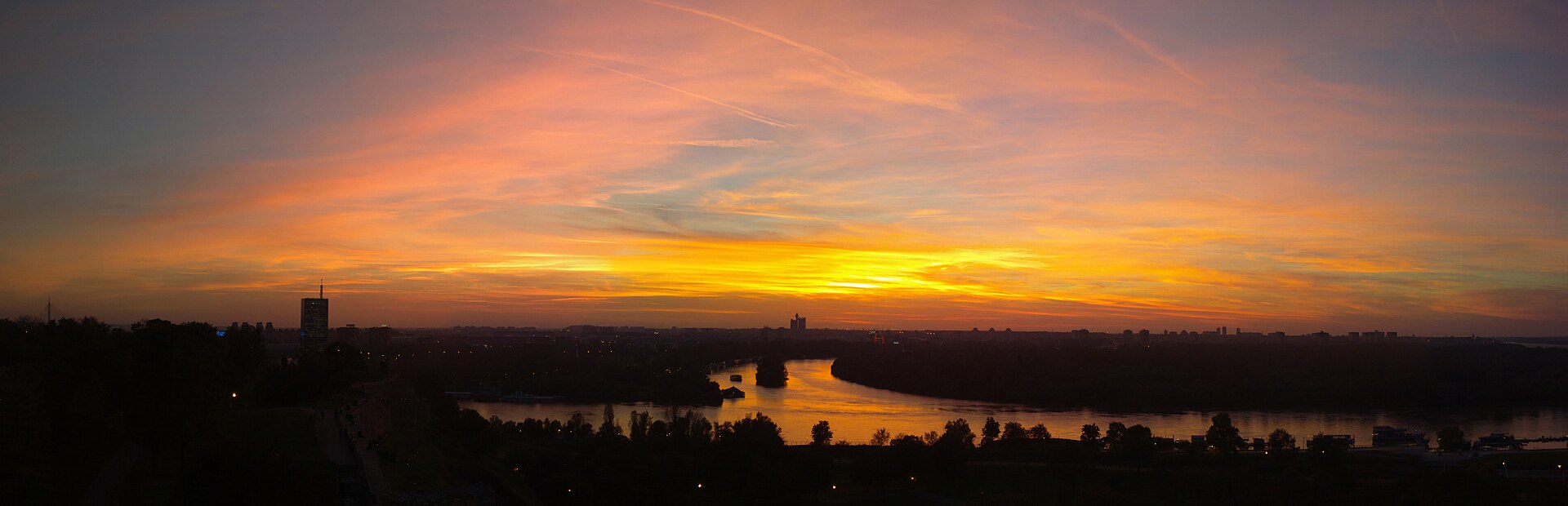
The case for spending more time in Belgrade than planned
Belgrade is one of those cities that consistently surprises people who underbudget for it. Travellers who have allocated a night on the way somewhere else often extend. The reasons are not the obvious tourist-circuit ones — Kalemegdan fortress and Skadarlija are done in a morning — but the accumulative ones: the food quality, the pace of the evenings, the scale of the city which means every neighbourhood has something different to offer. Understanding how Belgrade rewards extra time is more useful than a fixed number.
One day: transit Belgrade
A full day in Belgrade — say, arriving the previous evening and leaving the following afternoon — gives you Kalemegdan fortress and the confluence of the Sava and Danube rivers in the morning, Skadarlija bohemian quarter for lunch (the traditional kajmak, ćevapi, and rakija circuit), and the Knez Mihailova pedestrian street in the afternoon. This is a valid introduction to the city and leaves you with a clear sense of its scale, its food culture, and its energy. What it misses is everything that makes Belgrade specifically worth extending: the night, the floating clubs (splavi) on the Sava, the neighbourhood restaurants that are not on any tourist map, and the sense that the city operates at a completely different rhythm once you stop checking what sights remain.
Two days: the city starts making sense
Two nights in Belgrade gives you a full day to cover the main areas plus an evening that actually belongs to the city rather than to an itinerary. Day one: Kalemegdan, Stari Grad, Skadarlija, and the Nikola Tesla Museum (a genuinely good science museum, not just a tribute). Day two: the Savamala arts district along the Sava waterfront — galleries, coffee shops, and the concrete brutalist architecture that remains from 1970s river development — then the Republic Square area and the National Museum if it is open. An evening at a restaurant in Dorćol or a walk along the Sava towards the floating clubs gives Belgrade's nightlife a proper first chapter.
Three days: the right amount for most travellers
Three days is the length of stay that most people who like Belgrade wish they had planned from the start. The third day adds enough room to get genuinely lost — in the Zemun neighbourhood across the Sava (technically a separate city until 1934, now a quieter, more village-like district with an old town of its own), or in the Vračar neighbourhood around the enormous Saint Sava Cathedral (the largest Orthodox church in the world by volume at 18,500 m³, construction is effectively continuous). Three days also gives you a proper evening at Ada Ciganlija lake beach, which in summer is where Belgrade goes to decompress — a 4km river island with sandy beaches, sports facilities, and a completely local crowd.
Four days or more: Belgrade as a base
Four days moves Belgrade from city break into short stay. The fourth day opens up day-trip options: Novi Sad is 90km north by bus (1.5 hours, around 700 RSD), with the Petrovaradin Fortress and the pedestrian zone worth a full day. Sremski Karlovci, an elegant 18th-century town 10km south of Novi Sad, is a short add-on with wine tasting at the old cellars. The longer stay also means more time in the restaurant scene, which in Belgrade rewards patience — the best places often require either a reservation or a willingness to eat at off-peak hours.
The honest recommendation
For a first visit: two nights minimum, three strongly preferred. Belgrade is not a city where more days adds diminishing returns quickly — it adds actual things to do and experience. Travellers who try to see it in a single rushed day leave having seen the postcard version. Travellers who stay three days leave understanding why people keep coming back.