
Why Zagreb rewards three days
Zagreb is a city that many visitors fly through rather than into — it appears on itineraries as a transit point between Vienna or Budapest and the coast. That version of Zagreb is a 4-hour stop with Dolac market and the cathedral. It is consistently less satisfying than the city deserves. Three days in Zagreb gives you access to a genuinely interesting Central European city with its own museum culture, neighbourhood character, and food scene that has nothing to do with the coastal tourism of Split or Dubrovnik. It is also one of the more affordable capitals in the region, which means the extra days are not expensive ones.
Day one: Upper Town (Gornji Grad) and Dolac Market
Start at Dolac Market, the main open-air market above the main square. It opens Monday to Saturday from 6am and closes around noon — arrive before 9am for the full selection of produce, cheese, and local food. The market is both the most practical way to stock up on snacks and the most local-feeling part of the centre. From the market, walk up to Gornji Grad, the historic upper town on the hill above.
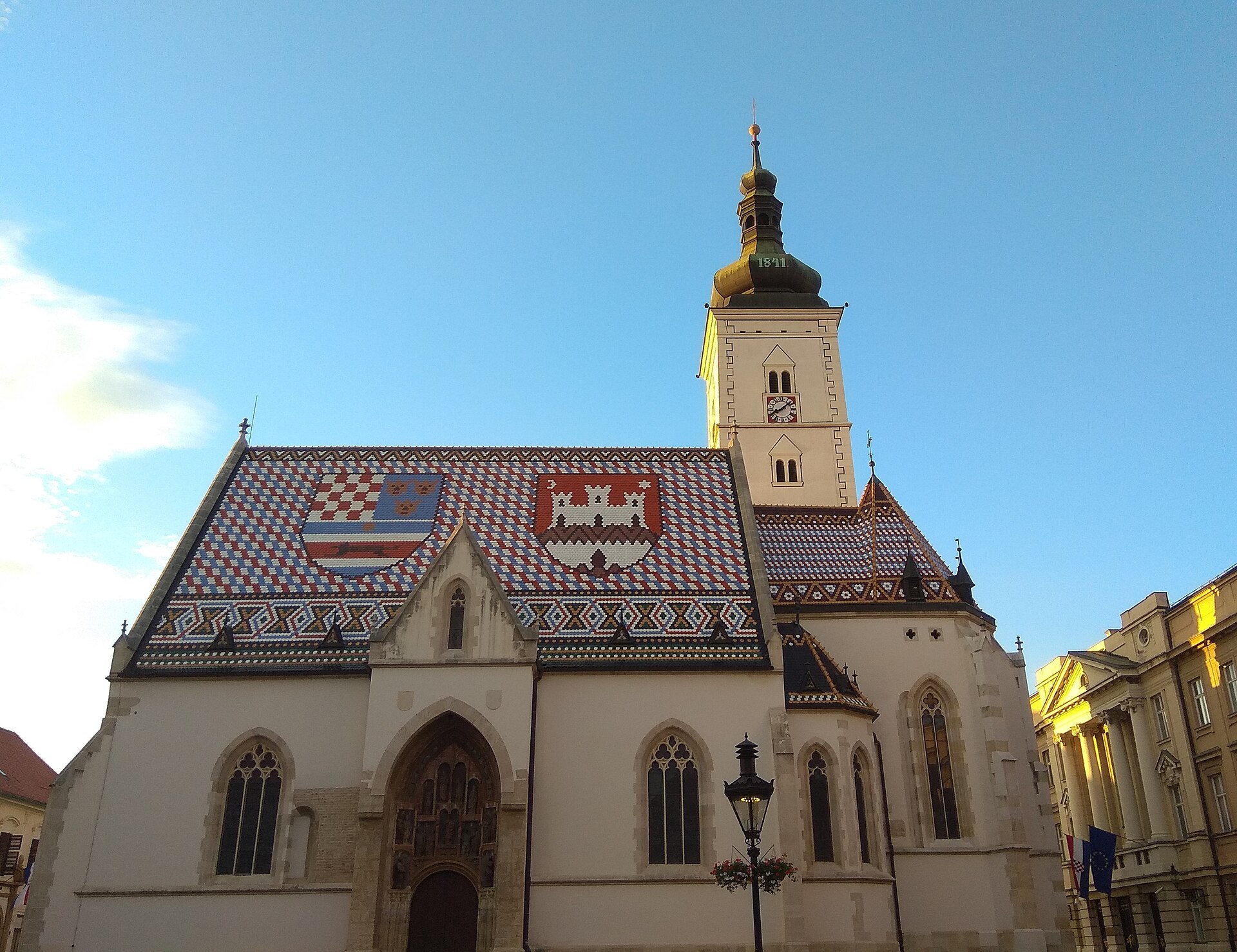
The upper town circuit is compact: the Cathedral of the Assumption (the tallest building in Croatia at 108m, its twin neo-Gothic spires visible from much of the city), St Mark's Church with its distinctive coloured tile roof (the Croatian coat of arms and the Zagreb city emblem in glazed tiles), the Lotrščak Tower and its noon cannon (fired every day since 1877), and the view from the tower terrace over the lower city. The funicular from Ilica street to the upper town costs 0.66 EUR and takes 64 seconds — the shortest funicular in the world still in regular operation. Walking up takes 10 minutes via the Strossmayer Promenade.
Day two: museums, Mirogoj, and Tkalčićeva
Zagreb has a museum density unusual for a city its size, and the quality is high. The Museum of Broken Relationships on Ćirilometodska in the upper town is the most internationally recognized — a permanent collection of objects donated by people from around the world, each representing a ended relationship, with a short text. It is genuinely affecting and takes about an hour. Entry is €5. The Zagreb City Museum, nearby, covers the city from medieval times through the 20th century and has a particularly good section on the 1880 earthquake that reshaped much of the lower town.
Mirogoj Cemetery, 2km north of the center (bus 106 from the Cathedral), is one of the great 19th-century European cemeteries. Designed by Herman Bollé in 1876, the main arcaded entrance wall contains chapels and mausoleums that represent every religious community in Zagreb — Catholic, Orthodox, Jewish, and Muslim sections exist within the same wall. The interior is park-like and quiet. Allow an hour.
In the evening, Tkalčićeva Street — the main cafe and bar street in the lower town — is where Zagreb gathers. The terrace bars fill from late afternoon and stay busy well into the night. It is the best street in the city for understanding how the evenings work here.
Day three: Plitvice Lakes or Samobor
Plitvice Lakes National Park is 140km south of Zagreb — 2-2.5 hours by bus from the main bus terminal (several departures daily, around €15 each way). The park is Croatia's most visited natural site: a series of 16 terraced lakes connected by waterfalls, walkable on wooden boardwalks over the water. Entry is expensive (€23.50-40 depending on season and circuit chosen) but the park is genuinely spectacular. Plan 4-5 hours in the park plus the travel time. Full day from Zagreb.
Samobor, 23km west of Zagreb, is a much simpler alternative for a half-day — a small town with a pastel-painted central square, a ruined castle hill, and local kremšnita cream cake that has been the town's specialty since 1856. Buses run every 30 minutes from the Zagreb western bus terminal (Autobusni kolodvor Zapadni). The journey takes 30-40 minutes. This leaves the afternoon free in Zagreb for a return to any museum or neighbourhood you did not finish.
Practical Zagreb notes
Zagreb uses the Euro (since January 2023 when Croatia joined the Eurozone). The tram network covers the lower town well; single tickets are €0.53 from machines or €1.33 from the driver. The city is entirely walkable for the upper and lower town circuit. The Zagreb Card covers unlimited tram travel and museum entries for 24 or 72 hours — worth calculating based on your museum plans.