
Why Ohrid rewards a longer stay
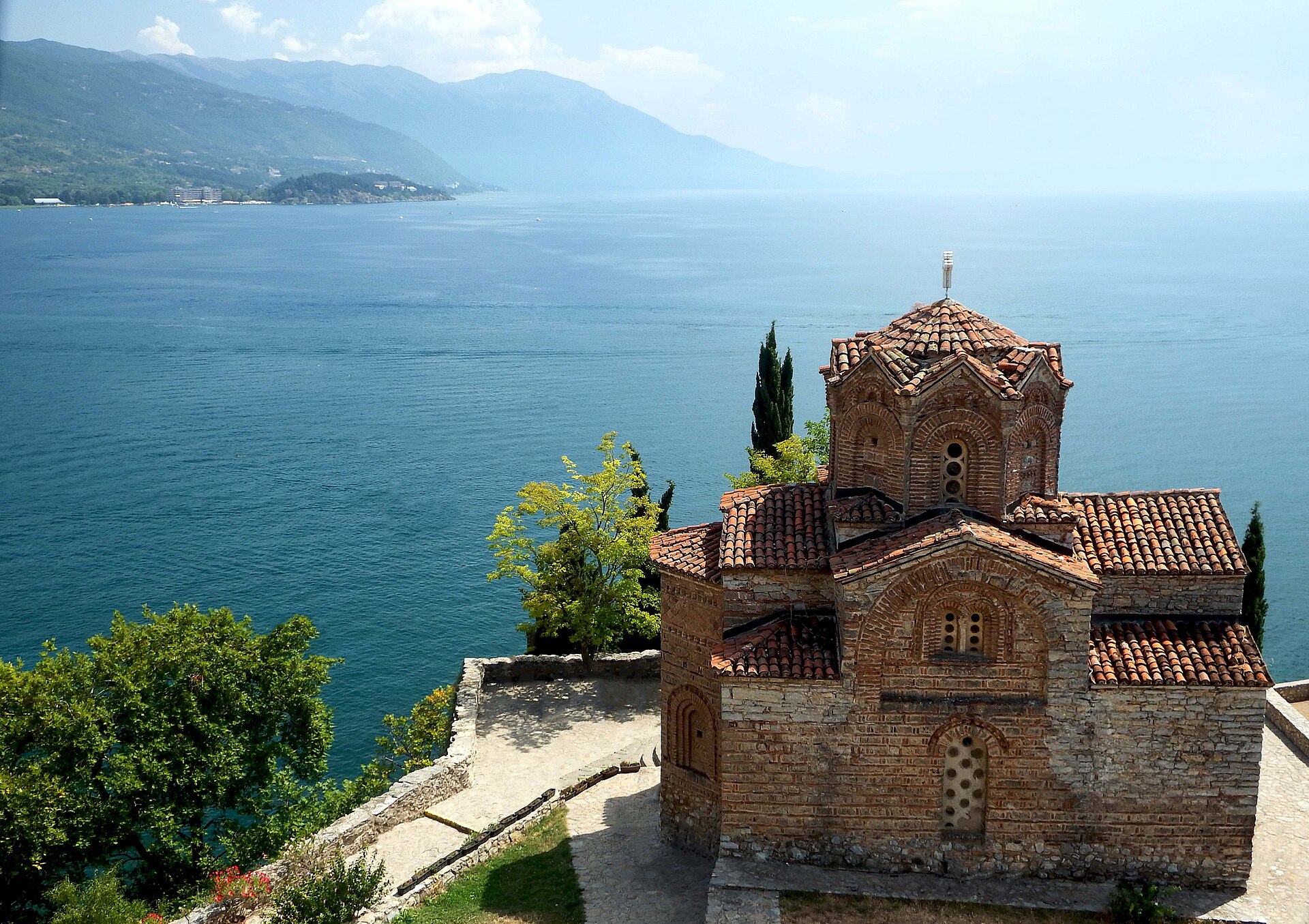
Ohrid is easy to underestimate from photographs. The lake looks scenic, the church on the cliff is recognizable, and it reads like a one-day stop. In person the calculus changes quickly. The old town is denser and steeper than it appears, the lake has a depth and colour that photographs flatten out entirely, and the combination of Byzantine churches, Roman theatre, and Ottoman-era houses in a compact hillside cluster creates a quality of place that takes time to absorb. Three days gives you two early mornings at the lake — when the light is best and the tourists from Skopje and Tirana have not yet arrived — and the flexibility to pace the old town rather than rush through it.
Day one: old town, Kaneo, and the waterfront
Start at the Church of St John at Kaneo, the 13th-century Byzantine chapel built on a rocky promontory directly above the lake. It is the most photographed spot in North Macedonia and for good reason — the combination of red-tiled roof, cliff edge, and deep blue water below it is unlike anything else in the region. Entry costs 100 MKD (under €2). Go before 9am if possible; the path from the old town takes 15 minutes and is quiet in the early morning.
From Kaneo, walk back up into the old town. The main circuit — Sveti Kliment i Pantelejmon church on Plaošnik, the upper bazaar lanes, and the City Museum in a 19th-century Ottoman house — takes a comfortable two hours. The Sveti Kliment complex (100 MKD entry) contains the largest medieval fresco collection in the Balkans and is worth allocating more time than you might expect. In the afternoon, walk the waterfront promenade south from the old port. The public beach areas near the harbour are fine for a swim in the late afternoon; the water temperature in August is around 23-24°C.
Day two: Samuel's Fortress and the Ancient Theatre
Samuel's Fortress dominates the hill above the old town. The 10th-century walls were built by Tsar Samuel of the First Bulgarian Empire and restored in the 1970s; the circuit of the walls gives panoramic views over the lake and the Albanian mountains across the water. Entry is 120 MKD (around €2). Go in the morning when the light is over your shoulder for photographs of the old town below.
The Ancient Theatre of Ohrid is built into the hillside below the fortress. Dating to the Hellenistic period and partially excavated in the 1980s, it is one of only two ancient theatres preserved in North Macedonia. Entry is included with a combined old town ticket. In summer, the theatre hosts concerts and performances as part of the Ohrid Summer Festival — one of the oldest cultural festivals in the Balkans, running July and August.
Spend the afternoon at a beach south of the old town. Gradište beach and Labino beach, reachable by water taxi from the harbour (around 200 MKD each way), are less crowded than the waterfront near the town and have cleaner water. The boat trip across a section of the lake is itself part of the experience.
Day three: Monastery of Saint Naum
The Monastery of Saint Naum is 29km south of Ohrid on the lake shore, very close to the Albanian border. It was founded in 905 AD by Saint Naum of Preslav, one of the disciples of Cyril and Methodius, and the church contains his tomb. The grounds sit on a bluff above a series of natural springs that feed into the lake — the springs well up through the gravel and are crystal clear, and the peacocks that live in the monastery grounds have been there for decades.
Minibuses run from Ohrid bus station to Saint Naum roughly hourly in summer (around 200 MKD one way). Alternatively, in summer a boat service runs along the lake shore from Ohrid port to Saint Naum — slower but scenic. The boat takes about 1.5 hours each way. Entry to the monastery grounds is 100 MKD. Plan 2-3 hours at the site, including the church interior, the spring pools, and the viewpoint terrace above the lake. Return to Ohrid by mid-afternoon.
Practical Ohrid notes
Ohrid uses the Macedonian Denar (MKD). The exchange rate is approximately 61-62 MKD per 1 EUR. Most restaurants and hotels accept euros but give change in denar. ATMs are available in the old town and on the main square. Accommodation in August should be booked 3-4 weeks ahead as Ohrid is popular with visitors from across the region. A mid-range guesthouse or apartment in the old town costs €40-70 per night. The airport nearest to Ohrid is Ohrid St. Paul the Apostle Airport, with connections to several European cities; otherwise Skopje airport is 170km away.