Why visit Ohrid?
Lake Ohrid holds UNESCO status on two separate grounds — as one of Europe's oldest and deepest lakes (estimated 4-5 million years old, 288 metres at its deepest) and for the cultural heritage of the town and surrounding landscape. The lake supports endemic species found nowhere else, including the Ohrid trout, which appears on virtually every restaurant menu in town. The combination of natural and cultural UNESCO recognition is rare anywhere in the world; in the Balkans, Ohrid is the only place that holds both simultaneously.
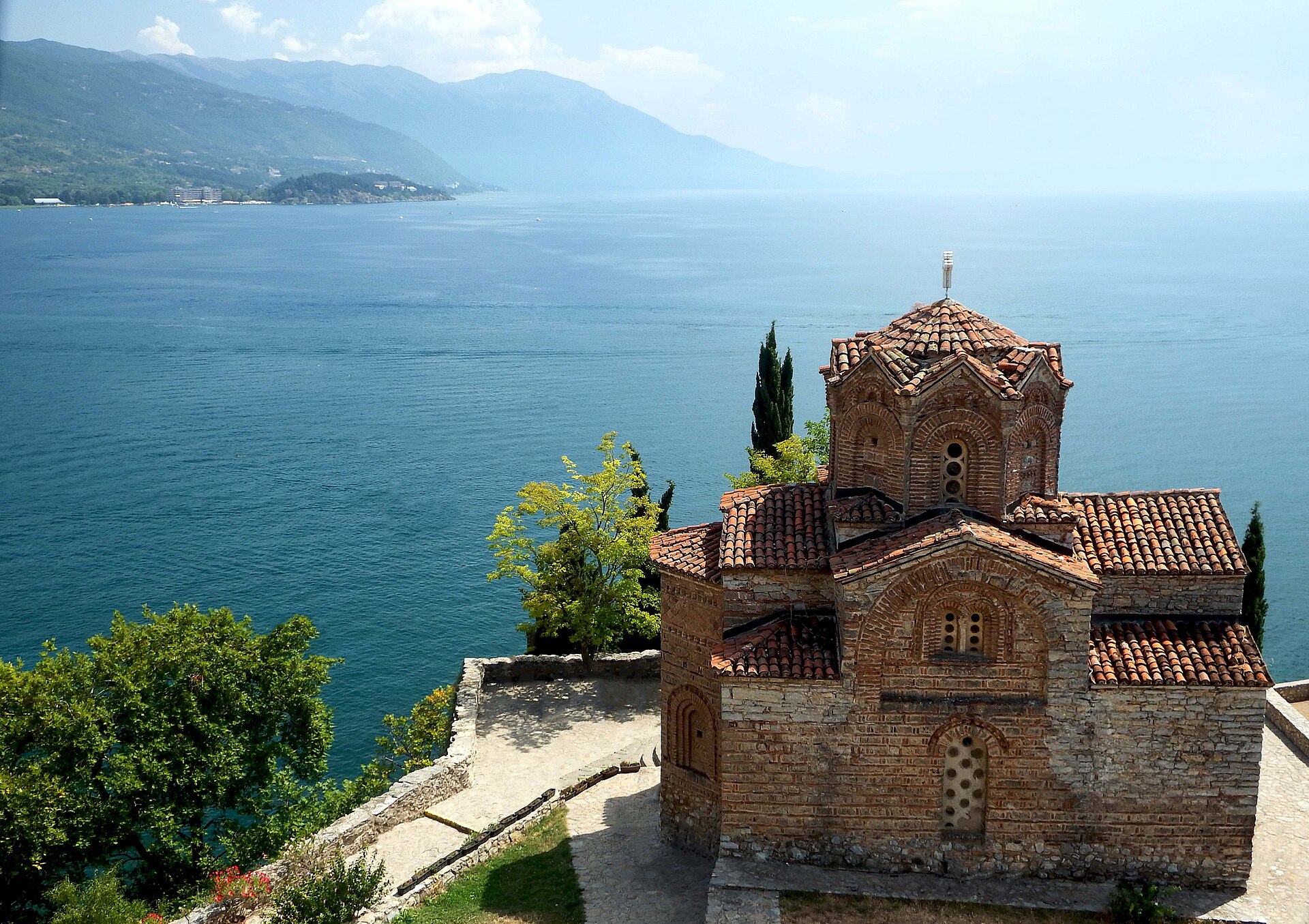
The Church of St John at Kaneo is the most photographed site in North Macedonia. It stands on a rocky promontory above the lake, a 10-minute walk from the old town center. Entry costs a few euros; the viewpoint ledge outside is free. The combination of Byzantine church, limestone cliff, and lake below produces a photograph that requires very little framing or processing. Swimming from the rocks directly below the church is popular in summer — the water is clear, the approach involves a short scramble from the shore path, and the setting is more private than the main town beaches.
The Plaošnik archaeological site adjacent to the old town holds the reconstructed Church of Saints Clement and Panteleimon and ongoing excavations of a 5th-century basilica mosaic floor. Saint Clement established a literary school here in 886 AD — one of the earliest centers of Slavic literacy anywhere. The old town above the lake contains a high concentration of Ottoman-era houses with overhanging upper floors above narrow lanes, several Byzantine churches, and the remains of the ancient city of Lychnidos beneath it. For a relatively small town, the density of genuinely significant sites is unusual. Ohrid is also the home of the Ohrid pearl — a cultured pearl made from the scales of endemic fish, manufactured locally and sold throughout the old town.
Need the practical booking angle next? Compare the best areas to stay in Ohrid or keep browsing our Balkan travel guides before you book.
Airport
Ohrid St. Paul the Apostle Airport
Currency
MKD
Ideal Trip
2-4 days
Trip Style
Lake escape + old town
Best for
Couples, lake scenery lovers, travelers who want a slow restorative stop, history and Byzantine art enthusiasts, and anyone whose itinerary needs a calmer counterpoint to busier cities.
Best time to visit
June through September for swimming (water temperature reaches 24 to 26 degrees Celsius in summer). May and October for a quieter visit with good walking conditions. July and August are peak season with higher prices and more visitors.
Best areas to stay
Ohrid Old Town
The Ohrid Old Town climbing the hill above the lake is the most atmospheric base -- Byzantine churches, stone lanes, and the lake visible between buildings. Staying here gives you easy morning access to the Church of Saint John at Kaneo before the crowds arrive. Guesthouses and small hotels cost 40 to 80 EUR per night. Best for: first-time visitors, couples, and photographers.
Lakeside Promenade
The Lakeside Promenade area along the flat waterfront has restaurants, cafes, and easy walking with lake views. Less atmospheric than the old town but more practical for families and travelers who want flat terrain. Hotels here cost 45 to 85 EUR per night. Best for: families, travelers who want easier daily logistics, and anyone doing a longer Ohrid stay.
Kaneo Side
The Kaneo side is the area closest to the Church of Saint John at Kaneo -- the most photographed spot in Ohrid. Staying here gives you the best morning access and the strongest lake-view rooms. Some guesthouses here have direct lake views, which can cost 60 to 100 EUR per night. Best for: travelers who specifically want the Kaneo atmosphere and the best lake views.
Center Plateau
The Center Plateau is a practical area between the old town and the lakeside promenade with good value accommodation and easy access to both. Hotels and apartments cost 40 to 70 EUR per night. Best for: budget-conscious travelers and anyone who wants a balanced base without committing to the old town hills or the flat lakeside.
Things to do
Prioritize lake views and old-town atmosphere
Those two elements are the main reason Ohrid feels different from a standard city break.
Stay long enough for a calm evening and morning
That timing usually explains why overnight stays work better than rushed stops.
Keep the pace scenic and light
Ohrid works best when travelers let the setting do more of the work.
How many days work best in Ohrid?
Ohrid is usually strongest when travelers plan roughly 2-4 days and then build the stay around one clear trip style instead of trying to force every possible sight into the schedule. In practice, the better approach is to choose the right neighborhood, keep the daily rhythm realistic, and leave room for food, walking, and one slower part of the day. That is usually what turns a city from a checklist stop into a place that actually feels memorable.
What first-time visitors should prioritize
For a first visit, the smartest strategy is usually to make location decisions early and activity decisions later. Travelers often overthink the day plan and underthink the base. In Ohrid, the right area usually shapes whether the trip feels walkable, polished, and easy or slightly harder than it needs to be. Once the base is correct, the rest of the trip tends to fall into place much more naturally.
Easy itinerary pairings
If Ohrid is only one stop in a wider Balkans route, two of the cleanest pairings are Skopje if you want a practical capital plus scenic lake pairing and Tirana for a wider Albania and North Macedonia route. The best pairing depends on whether you want the next stop to raise the energy, slow the pace down, or add a stronger scenic contrast. That kind of contrast usually creates a better multi-stop trip than choosing two cities that feel too similar.