Why visit Tirana?
Blloku was the Communist party leadership quarter until the fall of the regime in 1991 — ordinary Albanians were not permitted to enter. Today it is the most active neighborhood in the city: restaurants, bars, coffee shops, and the kind of outdoor terrace culture that makes Tirana feel livelier in the evenings than its size might suggest. The contrast between what Blloku was and what it is now is visible through the architecture — villas from the party leadership era survive, now converted to restaurants and boutique hotels, their new function explicitly aware of their former one.
Skanderbeg Square is the central gathering point, named after Albania's 15th-century national hero Gjergj Kastrioti. The mounted statue at the center of the square is the main visual reference. The National History Museum on the north edge of the square carries the largest and most discussed socialist-realist mosaic in the Balkans across its entire facade. The House of Leaves (Shtëpia e Gjetheve) is a few minutes walk from the square — it is free to enter and documents the surveillance operations of the Sigurimi secret police. The original listening equipment, hidden cameras, and interrogation records remain in place. It is one of the more affecting Cold War history museums in Europe.
The Dajti Mountain cable car (Dajti Ekspres) runs from the eastern edge of the city up to 1,011 metres. A round trip costs around €8. The views over the city, the valley floor, and on clear days the Adriatic to the west, are the payoff. The cable car takes about 15 minutes each way and operates daily except Monday. A coffee in central Tirana typically costs €1.00-1.50; dinner at a good local restaurant rarely exceeds €10-12 per person.
Need the practical booking angle next? Compare the best areas to stay in Tirana or keep browsing our Balkan travel guides before you book.
Airport
Tirana International Airport
Currency
ALL
Ideal Trip
2-3 days
Trip Style
Urban value break
Best for
Travelers curious about communist history and Albania's dramatic transformation, budget-conscious visitors, food explorers, and anyone who wants a genuinely off-the-beaten-track European capital.
Best time to visit
April through October are all workable. May, June, September, and October give the most comfortable temperatures for walking. July and August are hot but the city functions well year-round without strong tourist seasonality.
Best areas to stay
Blloku
Blloku is the most vibrant neighborhood in Tirana -- once sealed off for the communist party elite, now the best concentration of restaurants, cafes, and bars in the city. Walking distance from most central attractions. Hotels and boutique properties cost 50 to 90 EUR per night. Best for: food-focused travelers, nightlife seekers, and anyone who wants the most current version of Tirana.
Skanderbeg Square Area
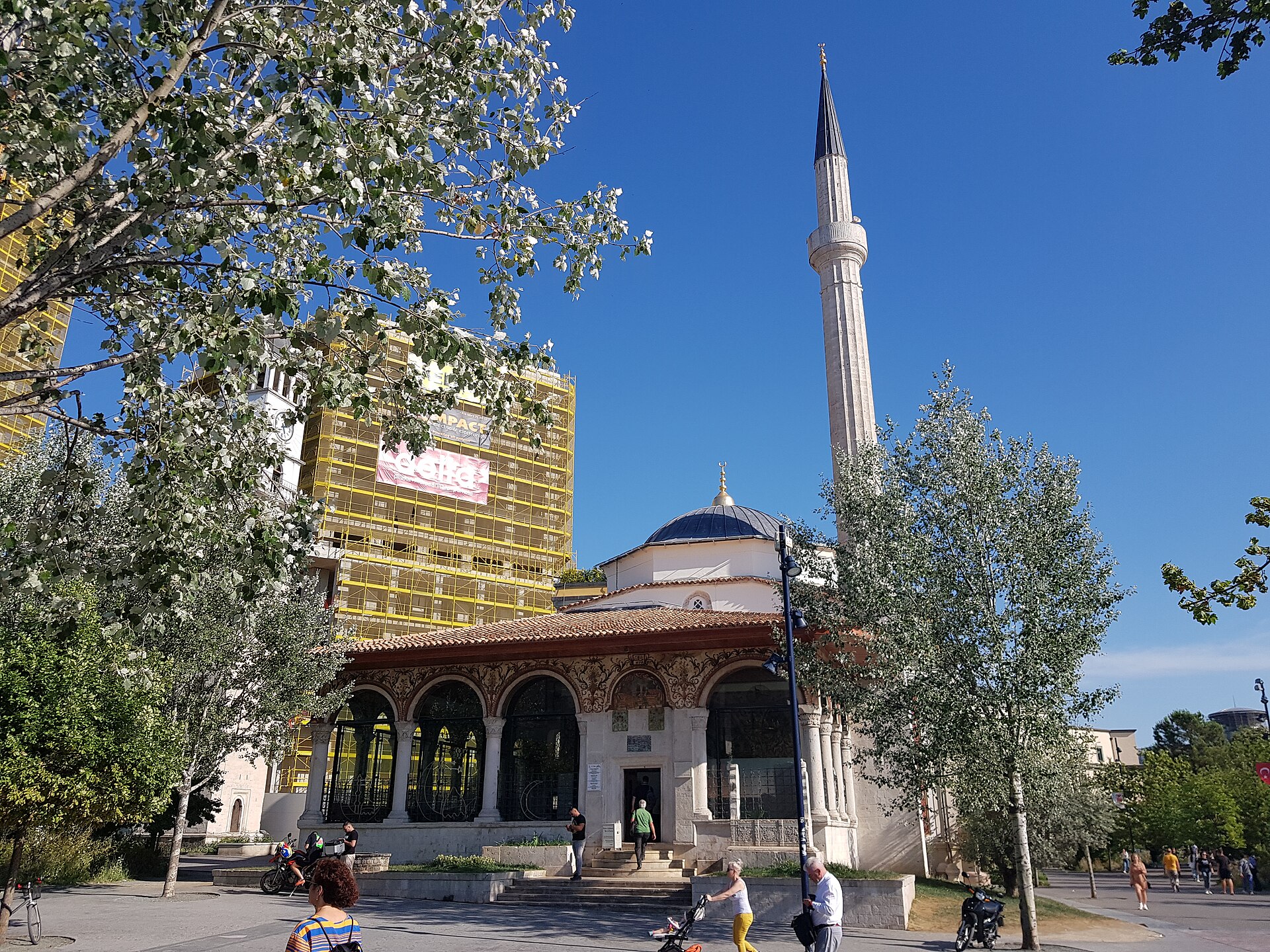
The Skanderbeg Square area is the most central Tirana base -- close to the National History Museum, the Et'hem Bey Mosque, the National Gallery, and easy walking to BunkArt 2. Hotels here run 55 to 100 EUR per night. Best for: first-time visitors who want straightforward access to the main sights and landmarks.
Pazari i Ri
Pazari i Ri (New Bazaar) is a lively market district with local restaurants, fresh food stalls, and a more everyday Tirana atmosphere than the polished Blloku scene. Hotels and guesthouses cost 40 to 75 EUR per night. Best for: travelers who want to eat well at local prices and experience a less tourist-facing side of the city.
21 Dhjetori
21 Dhjetori is a residential street area with good apartment-style accommodation and easy access to both Blloku and the main centre. More local in feel and lower in price than the central hotel zones. Apartments cost 35 to 65 EUR per night. Best for: budget-conscious travelers and longer stays.
Things to do
Use the center as your practical base
Tirana becomes easy quickly if you stay central and let the first day focus on orientation.
Spend time in Blloku after dark
It is one of the simplest ways to feel the city's younger, faster-moving side.
Treat Tirana as a value city break
It usually performs best for travelers who want energy and affordability over postcard polish.
How many days work best in Tirana?
Tirana is usually strongest when travelers plan roughly 2-3 days and then build the stay around one clear trip style instead of trying to force every possible sight into the schedule. In practice, the better approach is to choose the right neighborhood, keep the daily rhythm realistic, and leave room for food, walking, and one slower part of the day. That is usually what turns a city from a checklist stop into a place that actually feels memorable.
What first-time visitors should prioritize
For a first visit, the smartest strategy is usually to make location decisions early and activity decisions later. Travelers often overthink the day plan and underthink the base. In Tirana, the right area usually shapes whether the trip feels walkable, polished, and easy or slightly harder than it needs to be. Once the base is correct, the rest of the trip tends to fall into place much more naturally.
Easy itinerary pairings
If Tirana is only one stop in a wider Balkans route, two of the cleanest pairings are Ohrid for a calmer scenic second stop and Skopje if the itinerary is built around value capitals. The best pairing depends on whether you want the next stop to raise the energy, slow the pace down, or add a stronger scenic contrast. That kind of contrast usually creates a better multi-stop trip than choosing two cities that feel too similar.