Quick introduction
Blloku was the Communist party leadership quarter until the fall of the regime in 1991 — ordinary Albanians were not permitted to enter. Today it is the most active neighborhood in the city: restaurants, bars, coffee shops, and the kind of outdoor terrace culture that makes Tirana feel livelier in the evenings than its size might suggest. The contrast between what Blloku was and what it is now is visible through the architecture — villas from the party leadership era survive, now converted to restaurants and boutique hotels, their new function explicitly aware of their former one.
Skanderbeg Square is the central gathering point, named after Albania's 15th-century national hero Gjergj Kastrioti. The mounted statue at the center of the square is the main visual reference. The National History Museum on the north edge of the square carries the largest and most discussed socialist-realist mosaic in the Balkans across its entire facade. The House of Leaves (Shtëpia e Gjetheve) is a few minutes walk from the square — it is free to enter and documents the surveillance operations of the Sigurimi secret police. The original listening equipment, hidden cameras, and interrogation records remain in place. It is one of the more affecting Cold War history museums in Europe.
The Dajti Mountain cable car (Dajti Ekspres) runs from the eastern edge of the city up to 1,011 metres. A round trip costs around €8. The views over the city, the valley floor, and on clear days the Adriatic to the west, are the payoff. The cable car takes about 15 minutes each way and operates daily except Monday. A coffee in central Tirana typically costs €1.00-1.50; dinner at a good local restaurant rarely exceeds €10-12 per person.
Still deciding if Tirana is the right base overall? Open the full Tirana destination guide first, then come back here to compare neighborhoods and properties.
Best neighborhoods
Blloku
Blloku is the most vibrant neighborhood in Tirana -- once sealed off for the communist party elite, now the best concentration of restaurants, cafes, and bars in the city. Walking distance from most central attractions. Hotels and boutique properties cost 50 to 90 EUR per night. Best for: food-focused travelers, nightlife seekers, and anyone who wants the most current version of Tirana.
Skanderbeg Square Area
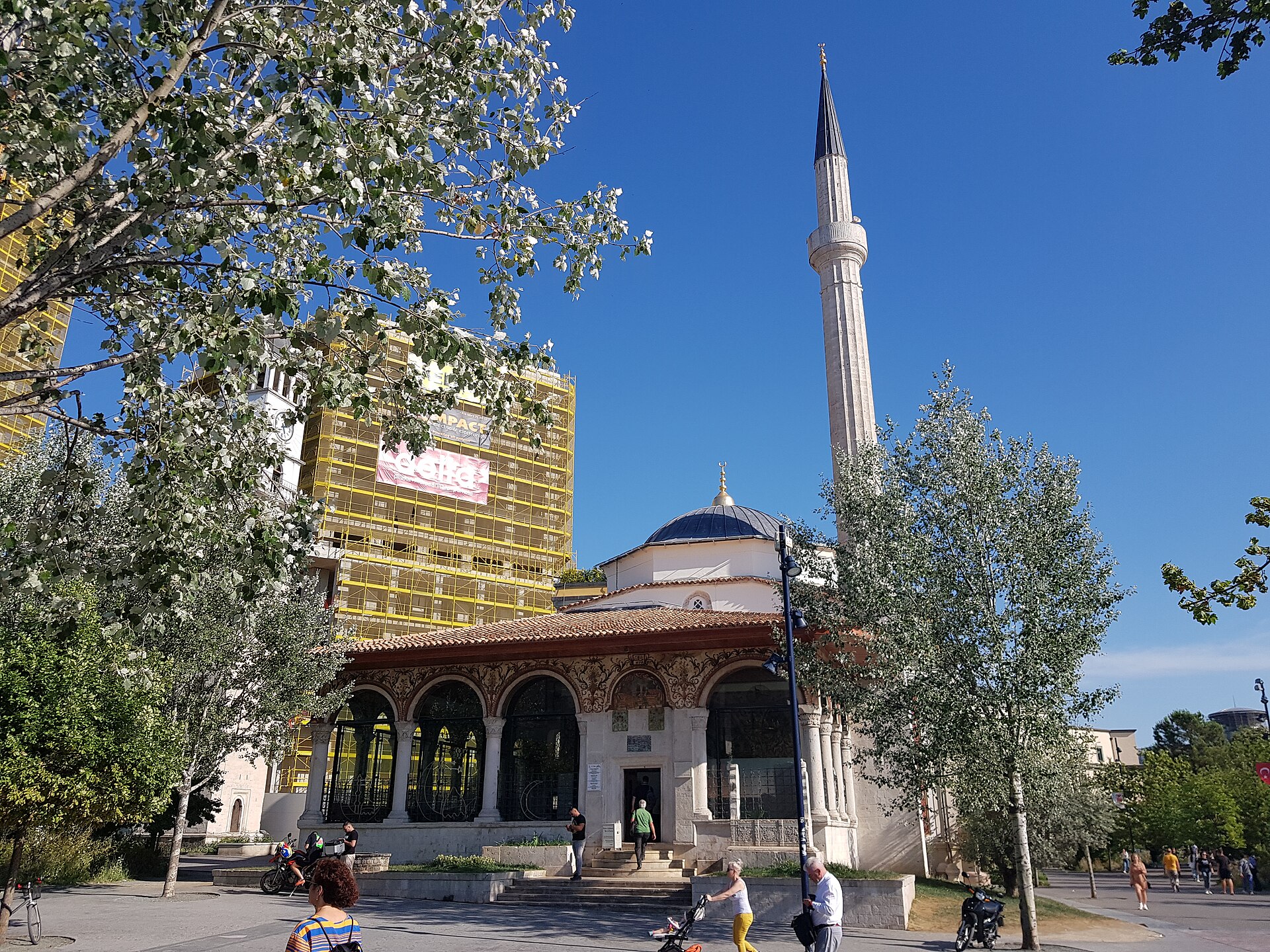
The Skanderbeg Square area is the most central Tirana base -- close to the National History Museum, the Et'hem Bey Mosque, the National Gallery, and easy walking to BunkArt 2. Hotels here run 55 to 100 EUR per night. Best for: first-time visitors who want straightforward access to the main sights and landmarks.
Pazari i Ri
Pazari i Ri (New Bazaar) is a lively market district with local restaurants, fresh food stalls, and a more everyday Tirana atmosphere than the polished Blloku scene. Hotels and guesthouses cost 40 to 75 EUR per night. Best for: travelers who want to eat well at local prices and experience a less tourist-facing side of the city.
21 Dhjetori
21 Dhjetori is a residential street area with good apartment-style accommodation and easy access to both Blloku and the main centre. More local in feel and lower in price than the central hotel zones. Apartments cost 35 to 65 EUR per night. Best for: budget-conscious travelers and longer stays.
How to choose the right base in Tirana
The best place to stay in Tirana depends less on star rating and more on the shape of the trip. If you want atmosphere first, staying near Blloku is often the cleanest answer. If you care more about sleep quality, easier arrivals, or slightly better value, Skanderbeg Square Area or a comparable nearby area usually works better. The goal is not to book the objectively best hotel. The goal is to book the base that matches your pace.
Common booking mistakes to avoid
The most common mistake is choosing a property only because the nightly rate looks attractive, while ignoring how the location changes the trip. In Tirana, that often leads to extra transfers, weaker evening atmosphere, or a stay that feels less aligned with the reason you chose the city in the first place. A second common mistake is leaving the booking too late, especially if the most useful neighborhoods only have a handful of strong-value options.