
Why three days works better than one in Mostar
Most people visit Mostar on a day trip from Dubrovnik or Split. They arrive by bus or tour, photograph the bridge, walk Kujundžiluk, eat a quick lunch, and leave before the afternoon light changes. That version of Mostar is fine for what it is, but it misses the thing that makes the city genuinely worth visiting: the way the old town feels after the day-trippers leave. If you have ever been in Mostar at 8pm on a summer evening with the bridge lit and the cafes full and the crowds gone, you understand why an overnight changes the calculation entirely. Three days gives you that — twice — plus time to get out of town and see the Herzegovina that surrounds it.
Day one: arrival, old town, and the evening bridge
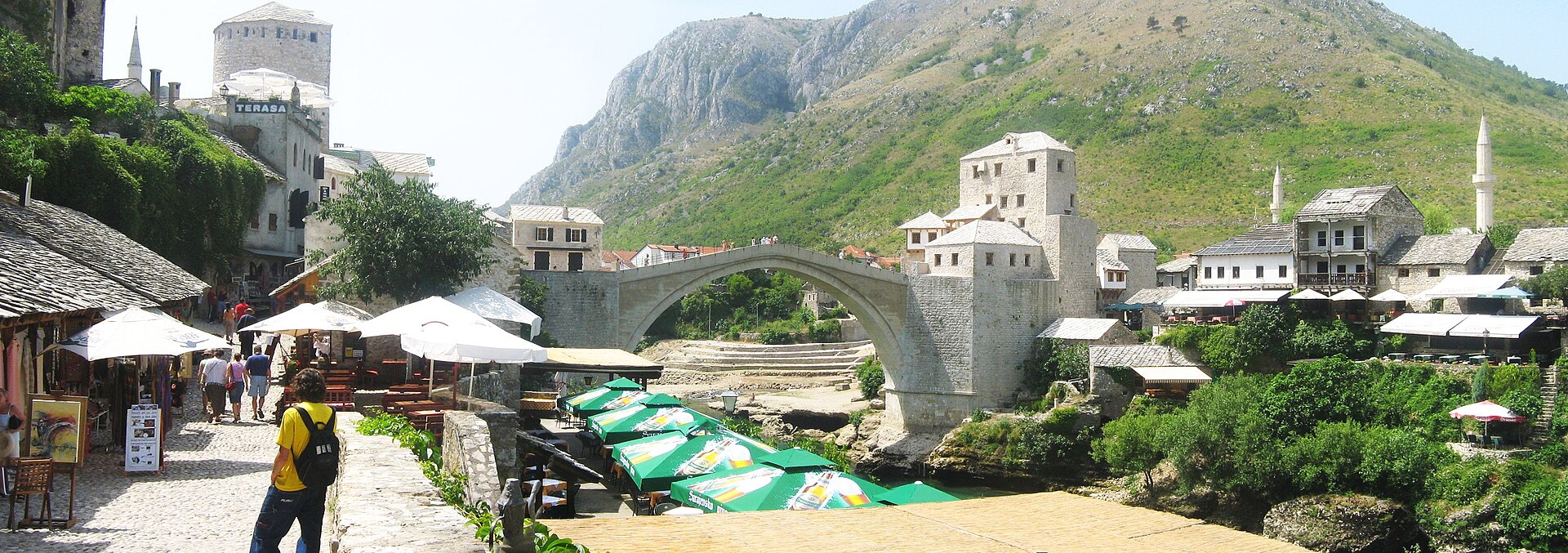
Arrive in the afternoon and spend your first hours with no agenda other than orientation. Drop your bags, walk to the Stari Most, and find a cafe with a river view. The bridge is most photographed in midday light, but the most atmospheric version of it is at dusk when the stone shifts colour and the crowds thin. Kujundžiluk, the bazaar street leading to the bridge from the north, is worth a slow first-evening walk: the coppersmith workshops are still open, the coffee culture here is Bosnian rather than espresso-style, and the lane itself is narrow enough to feel intimate rather than touristy at this hour.
For dinner, the restaurants closest to the bridge charge a view premium. The better value is ten minutes back into the residential streets behind the old town where local places offer Bosnian food — cevapi, burek, grilled meats — without the waterfront markup. A full dinner rarely exceeds 15-20 BAM (€7-10).
Day two: the bridge, Blagaj tekija, and Herzegovina wine
Use the morning for the bridge while the light is still manageable and before the tour buses arrive — usually before 10am. The bridge divers from the Ikre club usually begin their sessions later in the morning; if you want to see a jump, position yourself on the eastern bank downstream where the angle is clearest. The bridge itself is best appreciated from below, from one of the cafe terraces at river level, where the arch above you and the current below produce the scale that photographs from above flatten out.
After lunch, take a taxi or rideshare to Blagaj, 10km south of Mostar. The tekija — a Dervish monastery built directly into the cliff face above the Buna spring — is one of the more genuinely surprising sites in Bosnia. The spring emerges from the cliff at a constant 10-11°C, the water is an unusual blue-green, and the monastery above it has been standing since the 16th century. Entry is a few euros; the surrounding cafe terraces above the spring are a good place for Herzegovinian wine, which is produced in the surrounding villages. Žilavka white and Blatina red are the local varieties and almost always available by the glass.
Day three: Kravice waterfalls and the slower old town
Kravice waterfalls are 40km southwest of Mostar and require either a rental car, a taxi, or an organized day trip. The waterfall is a wide semicircular cascade about 25 metres high on the Trebižat river, with a swimming area at the base and a footpath around the rim. Entry is around 10 BAM (€5) in season. It is genuinely beautiful and genuinely crowded in July and August — arriving early makes a significant difference. If you prefer to stay in town, the third day in Mostar is a good opportunity to walk further into the residential neighbourhoods behind the old core, visit the War Photo exhibition on the 1990s conflict, and take a longer lunch at the Tima-Irma restaurant, which serves traditional Bosnian food at prices that reflect local rather than tourist demand.
Practical notes for Mostar
The currency is the Bosnian Mark (BAM), pegged to the Euro at approximately 1.96 BAM per 1 EUR. Most restaurants and many hotels quote prices in EUR but accept BAM. The bus station is about 1km from the old town. Dubrovnik is roughly 2.5 hours by bus; Split is around 3 hours. The old town accommodation — guesthouses and small hotels in and around Kujundžiluk — gives the best experience for a longer stay, though it books up in peak summer. Booking 4-6 weeks ahead is sensible for July and August.