Quick introduction
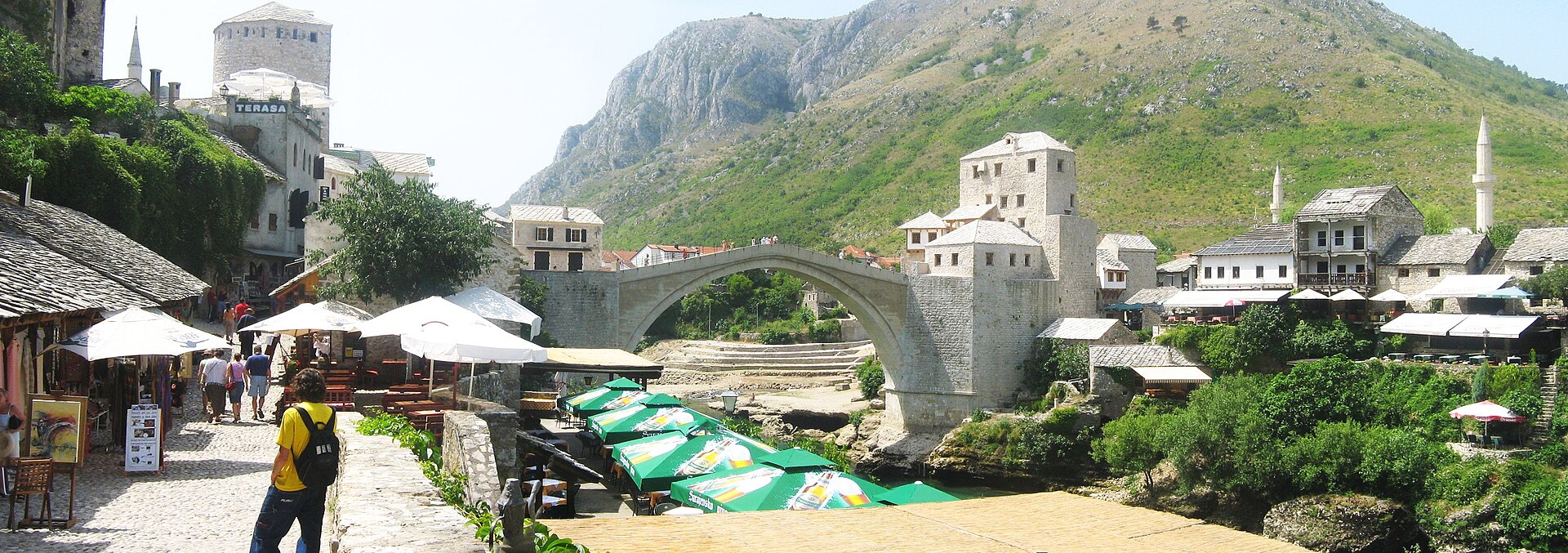
Stari Most — the Old Bridge — has crossed the Neretva river since 1566. Ottoman engineers built it from local limestone called tenelija, and the single arch spans 21 metres above turquoise water. Bosnian Croat forces destroyed it in November 1993. It was rebuilt using stone from the same quarries and reopened in 2004. Knowing this history changes the way you look at it: the reconstruction was as much a political act as an engineering achievement, and the new bridge carries that weight visibly. In summer, professional divers jump from the bridge — a tradition older than the war, continued through reconstruction, and still running today. The jump club (Ikre) organizes the dives; onlookers collect a donation before each jump.
Kujundžiluk is the bazaar street leading to the bridge from the northern side. It has sold copper work, textiles, and crafts for centuries. The older craftsmen still work in open-fronted workshops along the same lane — the coppersmithing is not purely decorative tourism, even if tourism is now the main economy. Coffee in Mostar is served in the Bosnian style: grounds in a džezva (small pot), a cup, and a sugar cube on the side. The ritual is slower and more deliberate than espresso culture elsewhere.
The city functions considerably better as an overnight stay than as a day trip. After the bus groups leave in the afternoon, the old town settles into a quieter mood that reveals more of what the place actually is. The surrounding Herzegovina region also produces the country's main wine — Žilavka white and Blatina red are the local varieties, available in most restaurants at modest prices. Blagaj, 10km south, has a Dervish tekija monastery built directly into a cliff above the Buna spring — a half-day excursion that most overnight visitors find worth adding.
Still deciding if Mostar is the right base overall? Open the full Mostar destination guide first, then come back here to compare neighborhoods and properties.
Best neighborhoods
Old Bridge Area
The Old Bridge area (Stari Most zone) on the east bank of the Neretva is the most atmospheric Mostar base. The bridge itself, the Kujundziluk bazaar street, the mosques, and the riverside restaurants are within a few minutes walk. Guesthouses here cost 40 to 85 EUR per night. Best for: first-time visitors, couples, and anyone who wants the bridge and old-town atmosphere to define the stay.
Central Mostar
Central Mostar on the west bank of the Neretva has more standardized hotels, easier road access, and a slightly less touristic feel than the old bridge zone. A 5-minute walk crosses the bridge to the main sights. Hotels run 45 to 90 EUR per night. Best for: travelers who want practical logistics and a short walk to the sights without staying in the most tourist-dense area.
West Mostar
West Mostar has the most practical large-hotel options and easiest parking. Further from the old bridge atmosphere but convenient for early departures and road-trip travelers. Hotels cost 50 to 100 EUR per night. Best for: travelers arriving by car, those with early morning connections, and anyone who wants chain-style hotel facilities.
Avenija Side
The Avenija side is the most practical Mostar option for travelers who need bus or road access without the old-town price premium. Mid-range hotels here cost 40 to 80 EUR per night. Best for: transit travelers and anyone prioritizing easy access over atmosphere.
How to choose the right base in Mostar
The best place to stay in Mostar depends less on star rating and more on the shape of the trip. If you want atmosphere first, staying near Old Bridge Area is often the cleanest answer. If you care more about sleep quality, easier arrivals, or slightly better value, Central Mostar or a comparable nearby area usually works better. The goal is not to book the objectively best hotel. The goal is to book the base that matches your pace.
Common booking mistakes to avoid
The most common mistake is choosing a property only because the nightly rate looks attractive, while ignoring how the location changes the trip. In Mostar, that often leads to extra transfers, weaker evening atmosphere, or a stay that feels less aligned with the reason you chose the city in the first place. A second common mistake is leaving the booking too late, especially if the most useful neighborhoods only have a handful of strong-value options.