Why visit Budva?
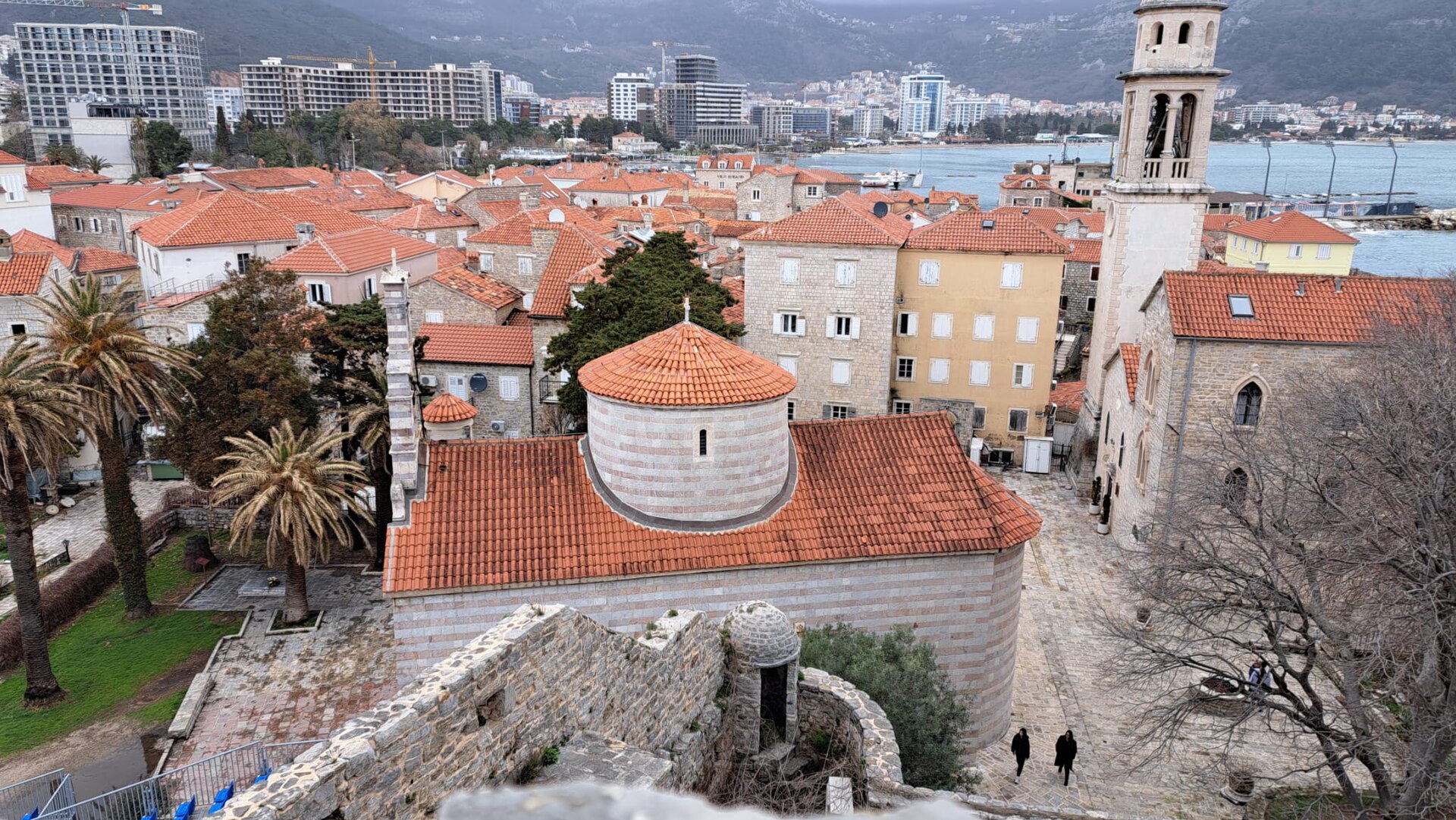
Budva's old town sits on a small peninsula surrounded by medieval walls. Walking the full perimeter takes under 20 minutes, but the real value is slowing down through the narrow lanes, the Orthodox church of the Holy Trinity at the center, and the terrace views over the Adriatic. The atmosphere is best in the early morning before group tours arrive and in the evening when the light changes and the crowds thin. Entry to the old town itself is free at all hours.
The two beaches closest to the old town are Budva City Beach (central, busy, convenient) and Mogren Beach — reached by a 10-minute walk through a short tunnel cut through the rock face, which makes it feel more secluded than it actually is. Both are free to access. Further west, Jaz Beach is 4km from the old town — wider, with cleaner sand and wave conditions that work for music concerts in summer. The Adriatic water temperature reaches 24-26°C in July and August, staying comfortable through September.
Sveti Stefan is the most photographed point in Montenegro: a fortified island village connected by a narrow causeway, 5km south of Budva. The island itself is now a Aman resort and off-limits to non-guests, but the viewpoint from the roadside above and the public beach at the causeway base are free. The contrast between the accessible coastline below and the walled-off village above is not entirely comfortable to look at, but the setting is undeniably dramatic. Most travelers base in Budva and visit as a half-day trip south — a taxi or local bus covers the distance easily.
Need the practical booking angle next? Compare the best areas to stay in Budva or keep browsing our Balkan travel guides before you book.
Airport
Tivat or Podgorica
Currency
EUR
Ideal Trip
3-5 days
Trip Style
Beach break + coastal escape
Best for
Beach-focused travelers, families, couples wanting a relaxed coastal base, budget-conscious visitors who want Adriatic coast without Dubrovnik prices, and anyone combining it with Kotor.
Best time to visit
June and September are the strongest months -- warm enough for swimming, significantly less crowded than July and August, and 20 to 30 percent cheaper for accommodation. July and August work but expect higher prices and resort-level crowds.
Best areas to stay
Budva Old Town
Budva Old Town is a walled medieval town with stone lanes, small churches, and a citadel above the sea. Staying here puts the best atmosphere, the nearest beach access, and the evening restaurant scene within a few minutes walk. Guesthouses and small hotels cost 70 to 140 EUR per night in peak season. Best for: couples and travelers who want character over resort convenience.
Slovenska Plaza
Slovenska Plaza is the main beach strip with large resort hotels, beach clubs, and easy summer logistics. Less atmospheric than the old town but better for families and travelers who want beach access directly from the hotel. Mid-range hotels run 80 to 150 EUR per night in peak season. Best for: families, beach-first travelers, and groups.
Becici Side
Becici is a quieter beach area about 2 kilometers southeast of Budva with a longer sandy beach and slightly lower prices than the main resort strip. Good for travelers who want coast without the old town crowd. Hotels cost 60 to 120 EUR per night in peak season. Best for: travelers who want more beach space and a calmer resort atmosphere.
Old Bus Station Side
The area near the old bus station is the most practical budget base in Budva -- close enough to walk to the old town and beach, with more apartment-style accommodation and lower prices. Apartments cost 40 to 75 EUR per night. Best for: budget travelers and anyone prioritizing easy arrivals and departures.
Things to do
Use the old town for atmosphere
Even short stays feel more memorable when you anchor the trip around the old stone core.
Keep beach time flexible
Budva works best when you mix a little coast time with easy evening wandering rather than overplanning every day.
Consider a day split between old town and waterfront
That balance usually gives first-time visitors the clearest feel for whether Budva suits them.
How many days work best in Budva?
Budva is usually strongest when travelers plan roughly 3-5 days and then build the stay around one clear trip style instead of trying to force every possible sight into the schedule. In practice, the better approach is to choose the right neighborhood, keep the daily rhythm realistic, and leave room for food, walking, and one slower part of the day. That is usually what turns a city from a checklist stop into a place that actually feels memorable.
What first-time visitors should prioritize
For a first visit, the smartest strategy is usually to make location decisions early and activity decisions later. Travelers often overthink the day plan and underthink the base. In Budva, the right area usually shapes whether the trip feels walkable, polished, and easy or slightly harder than it needs to be. Once the base is correct, the rest of the trip tends to fall into place much more naturally.
Easy itinerary pairings
If Budva is only one stop in a wider Balkans route, two of the cleanest pairings are Kotor if you want to split beach mood and scenic bay atmosphere and Dubrovnik if the wider trip is coast-led and short. The best pairing depends on whether you want the next stop to raise the energy, slow the pace down, or add a stronger scenic contrast. That kind of contrast usually creates a better multi-stop trip than choosing two cities that feel too similar.