Why visit Jajce?
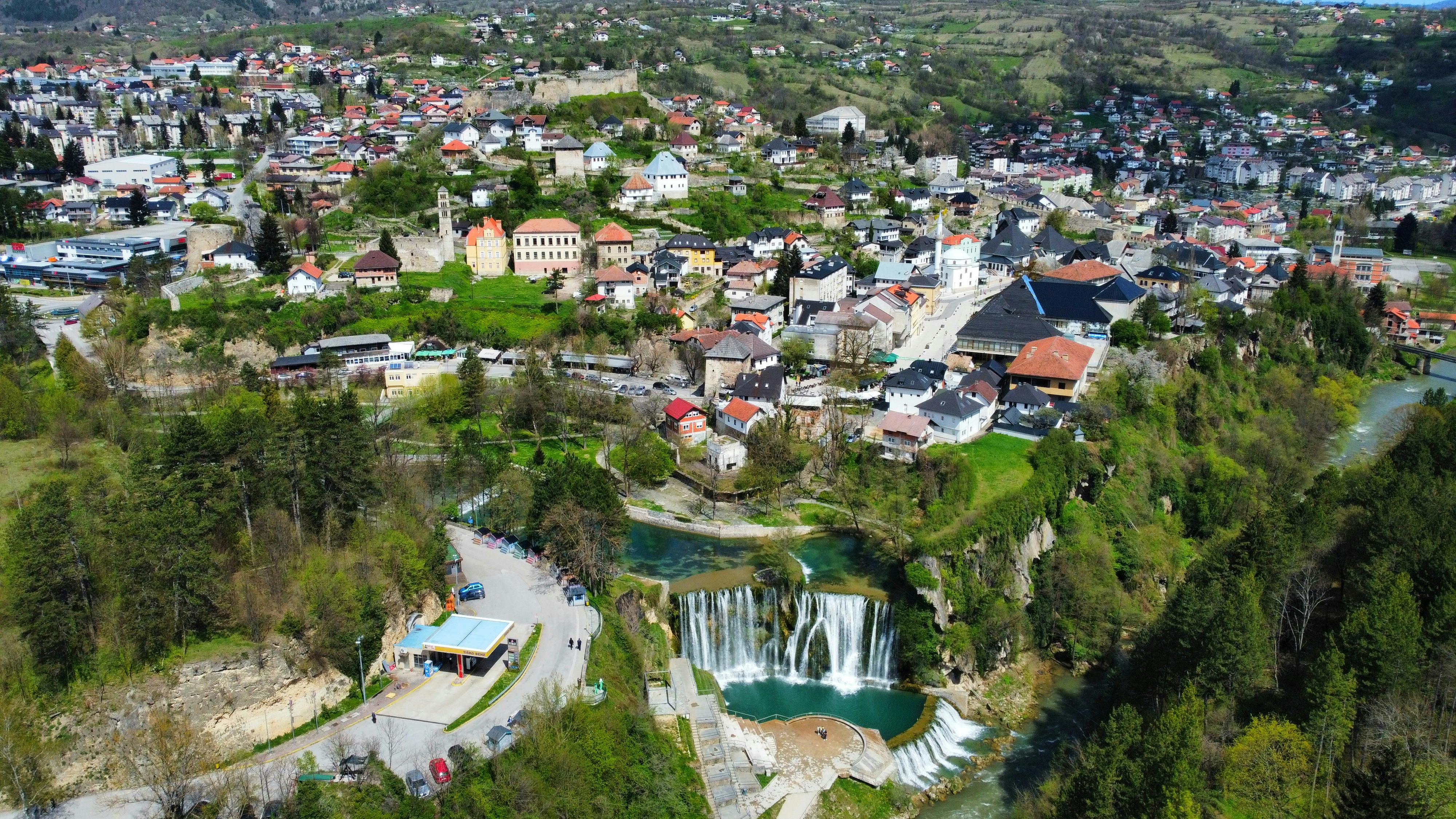
The Pliva waterfall (locally called Buk) drops approximately 17 metres directly in the town center, where two rivers meet at the base of the old town. It is an unusual thing to encounter — a legitimate waterfall built into the urban fabric rather than reached by a hike. The viewpoint from the stone bridge above the falls is free and takes no effort to reach; the spray reaches the path in wet weather. The waterfall is strongest in spring and after rainfall; in dry summer months the flow reduces but remains photogenic.
Jajce fortress rises above the waterfall and the old town on a rocky ridge. The town served as the capital of the medieval Bosnian Kingdom and held out against Ottoman forces until 1463 — one of the last Bosnian strongholds to fall. The fortress walls are partially intact and the climb takes around 15-20 minutes from the old town. The view from the top takes in the confluence of the rivers, the waterfall below, and the surrounding valley. Entry is a few euros or sometimes free depending on the season.
The Pliva watermills are a short walk or drive from the town center, on the isthmus between two connected lakes. A row of small stone mills lines the narrow channel — some dating back centuries, most still structurally intact, and the setting beside the calm lake water is one of the quieter and more photogenic points in central Bosnia. The Pliva Lakes themselves are good for an easy walk along the shore. Jajce also holds an unusual piece of 20th-century history: the AVNOJ building where the founding session of postwar Yugoslavia was held in 1943, now preserved as a museum.
Need the practical booking angle next? Compare the best areas to stay in Jajce or keep browsing our Balkan travel guides before you book.
Airport
Banja Luka or Sarajevo + transfer
Currency
BAM
Ideal Trip
1-2 days
Trip Style
Scenic historic short stay
Best for
Travelers moving through northwest Bosnia, photographers, anyone wanting an uncommercial Bosnian small-town experience, and route-stoppers between Sarajevo and Banja Luka or Split.
Best time to visit
May through October for the most comfortable conditions. Spring (April and May) often has the highest water levels, which makes the waterfall and lakes particularly dramatic. Summer is warm and the surrounding nature is at its greenest.
Best areas to stay
Old Town and Waterfall Zone
The Old Town and Waterfall Zone is the most practical Jajce base -- the Pliva waterfall, the old town streets, the fortress path, and the main restaurants are all within 10 minutes walk. Guesthouses here cost 30 to 50 EUR per night. Best for: first-time visitors and anyone who wants to see the waterfall at dawn or dusk without transit logistics.
Pliva Lakes Side
The Pliva Lakes side is a quieter, greener base a few kilometers outside the town centre, closer to the Pliva Lakes and watermills. Requires a short taxi or walk to reach the main Jajce waterfall. Accommodation runs 25 to 45 EUR per night. Best for: travelers who prioritize the lake scenery and want a more nature-oriented overnight.
Fortress Slope
The Fortress Slope is a quieter area on the hillside below the Jajce Fortress with local residential streets and good uphill views. Central enough to walk to the waterfall but calmer than the main tourist zone. Guesthouses cost 25 to 45 EUR per night. Best for: travelers who want a local feel and easy access to the upper historic side of town.
Town Center Edge
The Town Center Edge is a practical base between the historic waterfall zone and the main road access. Useful for travelers arriving by car or bus who need easy in-and-out logistics. Apartments and guesthouses cost 25 to 45 EUR per night. Best for: transit travelers and anyone with early morning connections.
Things to do
Start with the waterfall and old core together
Jajce is one of the rare places where the main landmark and the historic center work best as one combined first impression.
Leave time for the fortress and viewpoints
The upper views help the town make sense much better than a fast street-level stop alone.
Treat Pliva Lakes and the watermills as part of the trip
Jajce feels more complete when the stay includes both the town itself and the softer scenic side just beyond the center.
How many days work best in Jajce?
Jajce is usually strongest when travelers plan roughly 1-2 days and then build the stay around one clear trip style instead of trying to force every possible sight into the schedule. In practice, the better approach is to choose the right neighborhood, keep the daily rhythm realistic, and leave room for food, walking, and one slower part of the day. That is usually what turns a city from a checklist stop into a place that actually feels memorable.
What first-time visitors should prioritize
For a first visit, the smartest strategy is usually to make location decisions early and activity decisions later. Travelers often overthink the day plan and underthink the base. In Jajce, the right area usually shapes whether the trip feels walkable, polished, and easy or slightly harder than it needs to be. Once the base is correct, the rest of the trip tends to fall into place much more naturally.
Easy itinerary pairings
If Jajce is only one stop in a wider Balkans route, two of the cleanest pairings are Sarajevo if you want the next stop to add bigger-city history and food depth and Mostar if the wider Bosnia route should stay scenic and more atmosphere-led. The best pairing depends on whether you want the next stop to raise the energy, slow the pace down, or add a stronger scenic contrast. That kind of contrast usually creates a better multi-stop trip than choosing two cities that feel too similar.